
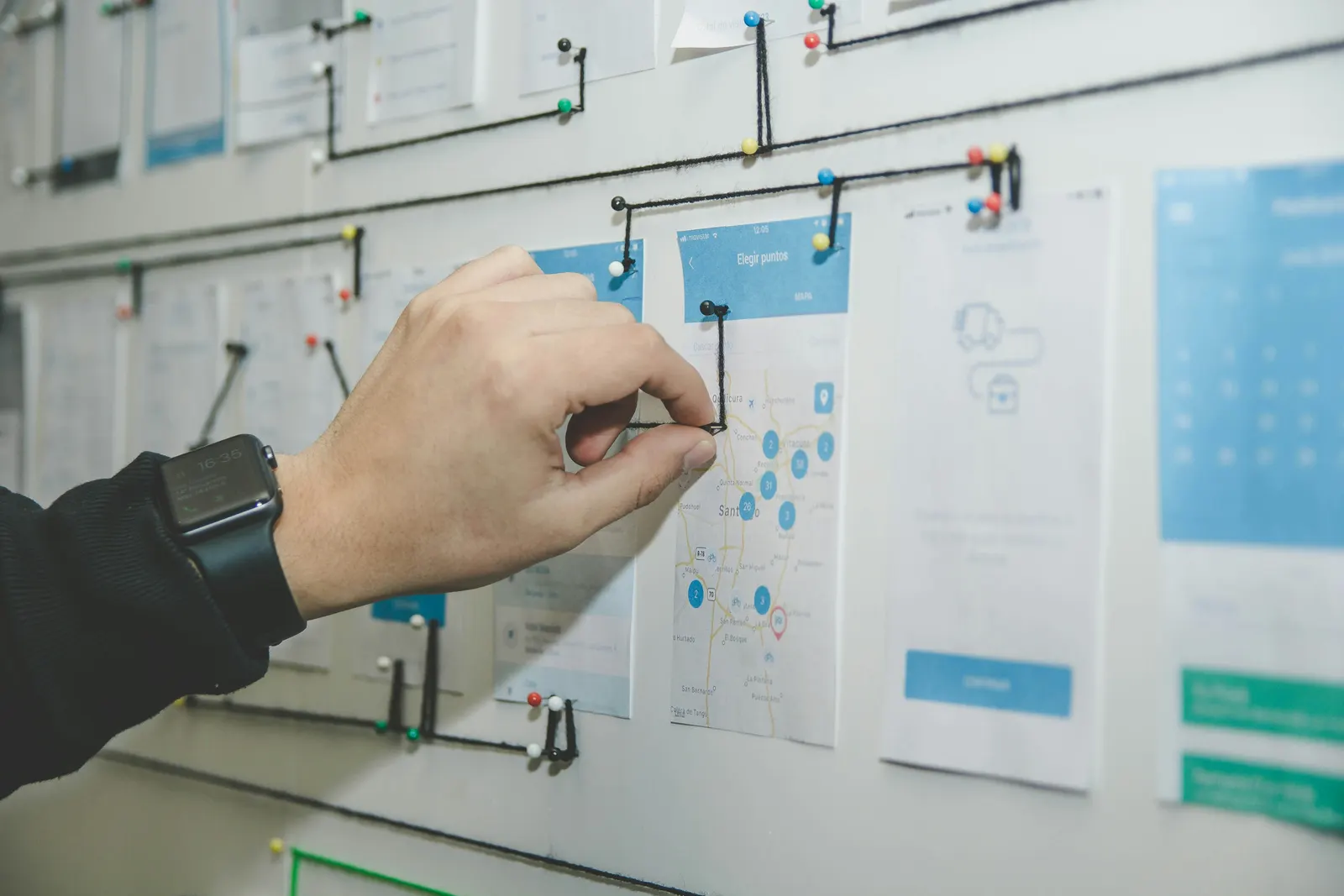
The Website Development Roadmap
Great websites are not built by accident; they are engineered through rigid processes. Discover the exact 6-phase development lifecycle required to launch scalable, high-performance digital products on time and on budget.
What is the Development Roadmap?
The website development roadmap is a strategic project management framework that outlines the entire lifecycle of creating a digital product. It sequences complex tasks across multidisciplinary teams—involving business strategists, UX/UI designers, frontend developers, backend engineers, and QA testers. Following a rigid roadmap prevents 'scope creep', ensures technical viability, aligns the final product with the initial business goals, and guarantees a smooth, secure deployment.
Why Process Prevents Catastrophe
Skipping phases—like jumping into coding before finalizing wireframes—leads to disastrous results. It causes expensive rewrites, delayed launches, and fundamentally broken user experiences. A structured roadmap acts as a risk mitigation strategy. It ensures that technical architecture decisions are made early, accessibility and SEO are baked into the core foundation rather than bolted on later, and stakeholders maintain visibility throughout the project.
Business Impact
Eliminates Scope Creep: Clear requirements gathering prevents endless feature requests from derailing the timeline.
Resource Efficiency: Parallel processing (e.g., writing backend APIs while designers finish UI) accelerates delivery.
Architectural Integrity: Early tech-stack planning prevents building scalable concepts on inadequate database foundations.
Flawless Launches: Dedicated QA environments prevent pushing catastrophic bugs to the live production server.
Core Components & Deep Dive
Understanding the structural mechanics behind this strategy.
Agile vs. Waterfall Methodology
Waterfall is sequential (Design must finish before Dev starts). Agile is iterative (building in small sprints, constantly adapting). Modern web development heavily favors Agile for its flexibility.
Scope Creep
The continuous, uncontrolled growth of project requirements during execution. The roadmap establishes a firm 'Statement of Work' to prevent endless additions without budget adjustments.
Staging Environments
A private, exact replica of the live server. Developers push code to the staging server first for client approval and bug testing before pushing to the public production server.
Information Architecture (IA)
Developed during the planning phase. It is the sitemap and logical hierarchy of the website, dictating how pages interlink and how databases must be structured.
CI/CD (Continuous Integration/Continuous Deployment)
Automated pipelines that test code the moment a developer commits it, and if it passes, automatically deploys it to the server, streamlining the launch phase.
Technical Debt
Taking shortcuts during development to launch faster. It accumulates 'interest' over time, eventually requiring a massive, expensive overhaul to fix the underlying messy code.
Actionable Implementation Framework
A step-by-step methodology to execute this effectively.
Phase 1: Discovery & Strategy
Define the business goals, target audience, and primary conversion metrics. Finalize the tech stack (e.g., WordPress vs. React), establish the Information Architecture (Sitemap), and sign the Statement of Work.
Phase 2: UX/UI Design
Create structural wireframes focusing on user journeys. Once UX is approved, apply high-fidelity visual UI design (colors, typography). Produce interactive prototypes in Figma for client sign-off.
Phase 3: Development & Architecture
The heaviest phase. Backend engineers construct the database schemas and APIs. Frontend developers write the HTML/CSS/JS to bring the Figma designs to life responsively.
Phase 4: QA Testing & Content Integration
Populate the site with final SEO-optimized copy and assets. Execute rigorous Quality Assurance: cross-browser testing, mobile responsiveness checks, load testing, and security audits.
Phase 5: Deployment & Launch
Migrate the codebase from the staging environment to the live production server. Configure the domain DNS, provision SSL certificates, and submit XML sitemaps to Google Search Console.
Best Practices
- Secure formal client sign-off on high-fidelity designs before writing a single line of frontend code.
- Implement SEO architecture (meta schemas, clean URLs, fast TTFB) during development, not after.
- Conduct user testing on the staging environment to catch UX friction points.
- Set up automated daily backups on the production server immediately upon launch.
- Provide detailed CMS documentation and training to the client before handing over the keys.
Common Mistakes
- Never launch a website on a Friday afternoon; if the server crashes over the weekend, you lose revenue.
- Don't allow clients to add 'just one more feature' during development without executing a change order.
- Avoid using lorem ipsum text in the final design phase; real copy dictates layout spacing.
- Don't ignore Core Web Vitals during QA. Fix performance bottlenecks before the site goes live.
- Never forget to remove the 'noindex' tag (which hides the staging site from Google) upon live launch.
Agile vs. Waterfall Development
| Project Aspect | Agile Methodology | Waterfall Methodology |
|---|---|---|
| Execution Style | Iterative sprints (e.g., 2-week cycles) | Strict, sequential phases |
| Flexibility | High. Easily adapts to changing requirements | Low. Changes require returning to Phase 1 |
| Client Involvement | Continuous feedback during every sprint | Feedback typically occurs only at milestones |
| Risk Management | Identifies technical failures early | Errors often discovered late in QA phase |
| Best Use Case | Complex web apps, ongoing digital products | Fixed-budget, highly defined brochure websites |
Recommended Tools Stack
Jira / Asana / Trello
Essential project management platforms used to organize sprints, assign tasks, and track bug resolution across the team.
Figma
The core collaboration tool used in Phase 2 for all UX wireframing, UI design, and developer handoff.
GitHub / GitLab
Version control repositories used during Phase 3 to manage codebase branches and enable collaborative coding.
BrowserStack
Used heavily in Phase 4 (QA) to test the website across dozens of real physical devices and legacy browsers.
Actionable Checklist
Phase 1: Is the sitemap and target tech stack finalized and approved?
Phase 2: Are wireframes and high-fidelity UI prototypes signed off?
Phase 3: Is the codebase version-controlled and responsive across mobile breakpoints?
Phase 4: Does the site pass Core Web Vitals and cross-browser testing?
Phase 4: Are all forms, payment gateways, and API integrations verified functioning?
Phase 5: Is the SSL certificate active and 'noindex' tags removed upon launch?
Post-Launch: Are automated off-site backups and uptime monitoring configured?
Expert Insights
"The 'Content First' Approach: The biggest bottleneck in web development is waiting for the client to provide the text. A design built around 'Lorem Ipsum' will break when actual, longer content is injected later. Demand at least draft copy during Phase 1. It informs the UX architecture and prevents massive layout revisions."
"The Pre-Launch SEO Migration Map: If you are redesigning an existing website, you must map every single old URL to its corresponding new URL and implement 301 redirects during Phase 5. If you fail to do this, all existing organic traffic will hit 404 dead ends, destroying years of SEO equity overnight."
Frequently Asked Questions
Comprehensive answers for professionals and business owners.
Continue Learning (Related Guides)
What is Website Development?
Deep dive into the coding and architecture of Phase 3.
UI vs UX Design Explained
Understand the visual and psychological goals of Phase 2.
Website Security & Maintenance
Master the protocols required for the post-launch phase.
Website Speed Optimization
Ensure you pass Core Web Vitals during the QA phase.
WordPress Complete Guide
Learn how the roadmap applies to the world's top CMS.
Need Expert Help with Your Strategy?
Stop guessing with algorithmic updates. Partner with Jagmohan Kurmi to build a robust, scalable, and AI-ready search architecture.