How to Get Your Business Recommended by ChatGPT
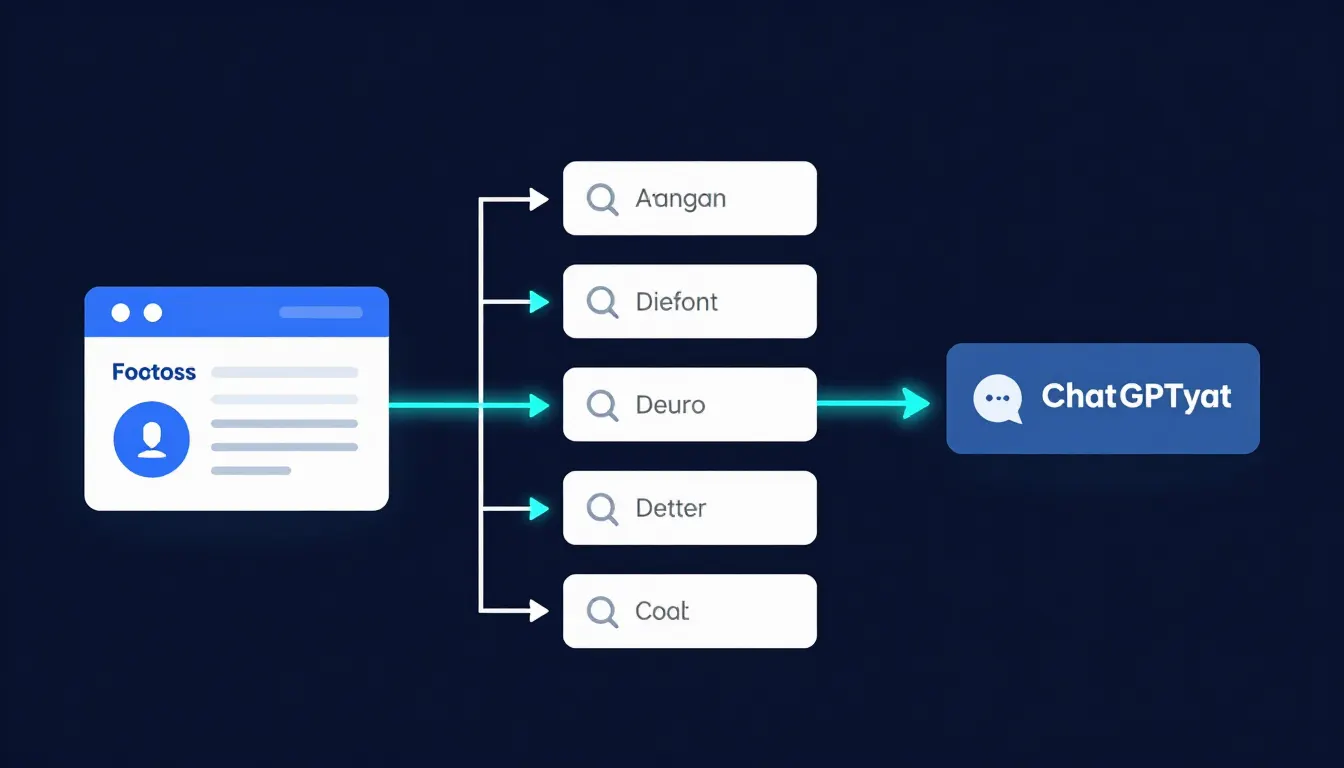
When someone asks ChatGPT "who is a good SEO consultant in India" or "which agency handles local SEO in Jabalpur", the model does not browse a directory and pick a winner. It draws on what it has read about entities on the web and, when search is enabled, on pages it retrieves at that moment. Getting recommended is therefore not a setting you switch on. It is the result of being a clearly defined, consistently described, well-corroborated business that the model can confidently name.
Quick Answer: How Do You Get Recommended by ChatGPT?
Make your business a clear, consistent entity across your website and the web, publish crawlable pages that state what you do in plain quotable sentences, earn mentions on reputable third-party sites, and test regularly what ChatGPT actually says about your category. None of this guarantees a recommendation. It removes the reasons a model would skip or misdescribe you.
How ChatGPT Decides What to Recommend
There are two situations, and they behave differently. In the base model, ChatGPT answers from what it learned during training, so it can only recommend businesses it has seen described often and consistently enough to remember. With search enabled, it retrieves live pages and synthesises an answer with citations, which is why a newer or smaller business can appear even if it was never in the training data.
In both cases the model is doing the same underlying job: matching a question to entities it understands. If your business is an ambiguous or inconsistent entity, the model hedges. It either names a competitor whose identity is clearer, or it gives a generic answer and names nobody. That is the gap this work closes.
Step 1: Define Your Business as One Entity
ChatGPT reasons about entities, not keywords. If your name, services, and location are stated differently on your website, your Google Business Profile, and your directories, the model cannot confidently connect them to one business. Start here:
- Use one exact business name everywhere. Do not alternate between a personal name, a brand name, and abbreviations.
- Add Organization and Person schema with a stable
@idandsameAslinks to your real profiles. - State your services, location, and who you serve in plain sentences on your homepage and about page.
This is the core of entity SEO, and it is the single highest-leverage step for any AI recommendation.
Step 2: Write Pages the Model Can Quote
A recommendation needs something to quote. If your site describes your work in vague marketing language, the model has no clean fact to attach to your name. Write service pages that open with a direct statement: who you help, what you do, and where. A sentence like "Jagmohan Kurmi provides SEO and AI search optimization for small and mid-size businesses across India, based in Damoh, Madhya Pradesh" is something a model can lift and attribute. A sentence like "we deliver cutting-edge solutions" is not.
Keep those pages crawlable. Content rendered only after JavaScript, or blocked in robots.txt, may never reach the retrieval system ChatGPT uses when it searches. For the content side, see how to optimize a website for ChatGPT.
Step 3: Get Corroborated Elsewhere
A model trusts a fact more when it sees it in more than one place. Your own website stating that you are an SEO consultant is a claim. The same fact appearing on your LinkedIn, a directory, a guest article, or a client site is corroboration. You do not need dozens of mentions. You need a small number of consistent ones on sites the model is likely to have read.
This is also why buying mentions or stuffing directories backfires. Inconsistent or low-quality references make the entity noisier, not clearer.
Step 4: Test What ChatGPT Actually Says
Guessing is useless here. Ask ChatGPT the questions your buyers ask, both with and without search, and write down the result:
- Ask for a recommendation in your category and city.
- Ask what your business does and note any wrong facts.
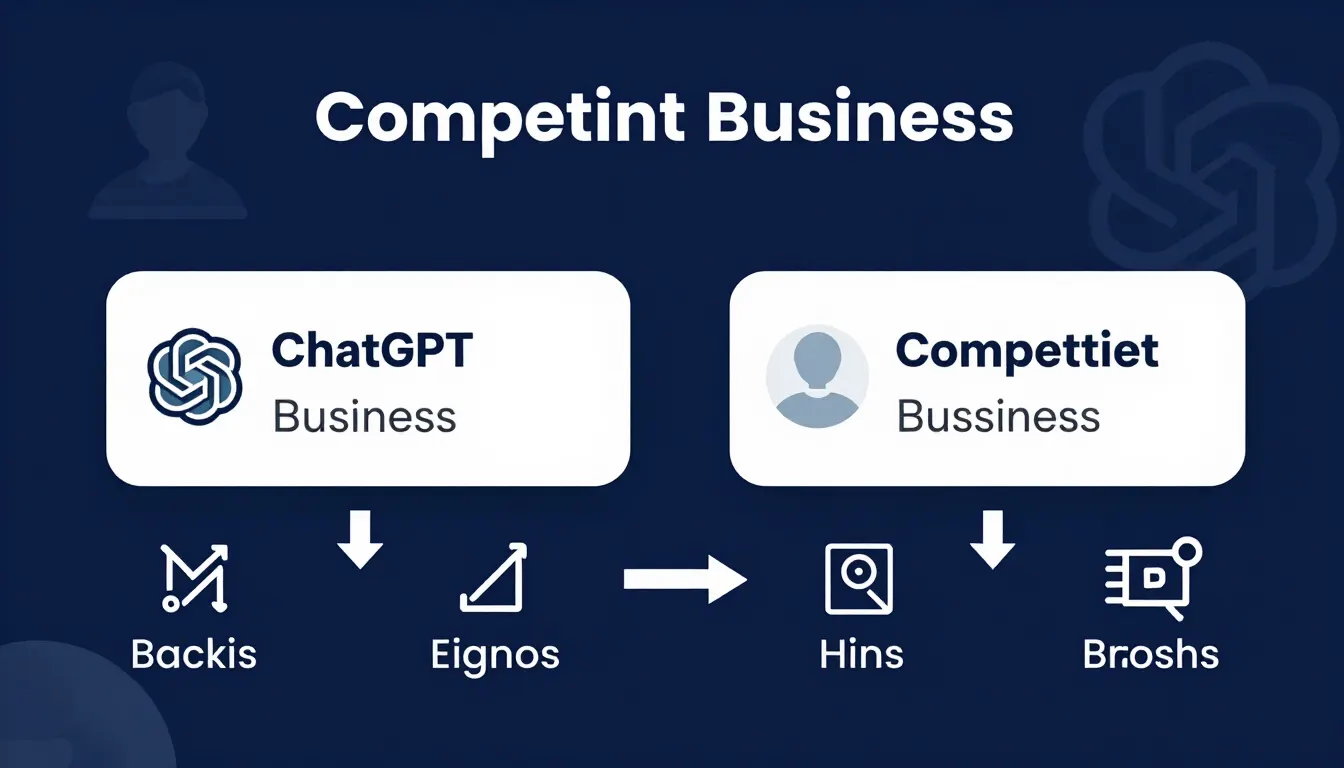
- Note which competitors are named and how they are described.
- Repeat monthly, because answers shift as the model and the web change.
If the description is wrong, the fix is almost always consistency: correct the fact everywhere it appears, not just on your site. See how to correct wrong business information in AI search.
A Realistic Example
Take a dental clinic in Indore. It ranks on Google for "dentist in Indore" but never appears when someone asks ChatGPT for a dentist recommendation there. Checking the web usually reveals the cause: the clinic name on the website differs from the name on its Google Business Profile, its services are described only inside image banners the crawler cannot read, and no other site mentions it. Fixing the name consistency, moving the service description into real text, and earning two or three directory or local-publication mentions gives the model something coherent to work with. Whether it then recommends the clinic depends on competition and on the model, which no one controls.
What This Cannot Do
No framework guarantees that ChatGPT will recommend your business. The model is opaque, it changes, and for many queries it will keep recommending whoever has the strongest, most consistent footprint. What you can do is remove the avoidable reasons you are skipped: an unclear entity, unreadable content, and no corroboration. That is the honest scope of this work.
Common Mistakes
- Treating a ChatGPT recommendation as something you can buy or switch on.
- Using different business names across your site and profiles.
- Hiding your key facts inside images or JavaScript.
- Writing only marketing slogans, with no quotable facts.
- Never actually testing what the model says about you.
If you want this diagnosed properly rather than guessed, an AI visibility audit records exactly how ChatGPT and the other assistants currently describe your business, and our ChatGPT visibility optimization work builds the entity and content foundation behind it. You can also start with a free consultation.
Ready to Implement This Strategy?
Stop reading and start executing. Explore our Data-Driven SEO Services or book a direct strategy call.
Book Your Strategy AuditFrequently Asked Questions
Transform Insights into Revenue
Partner with an AI-driven consultant to map out a measurable growth system specifically for your brand.

Jagmohan Kurmi
AI-Driven Full-Stack Digital Marketer
Jagmohan Kurmi helps Indian businesses grow with SEO, local SEO, Google Ads, Meta Ads, WordPress websites, AI visibility, lead generation, content strategy, AI tools training, and performance-focused digital marketing systems. As an AI SEO Expert in India, I specialize in Answer Engine Optimization and data-driven performance marketing using my M.Tech in Industrial Engineering and Management framework.