How to Show Evidence in AI Search Content
Showing evidence in AI search content means making the basis for your claims visible and verifiable, both to human readers and to generative engines like Google AI Overviews, ChatGPT, Gemini, and Perplexity. It matters because AI engines are designed to synthesize credible information and reduce hallucination, so they favor content that attributes its sources, cites primary documents, and distinguishes established facts from opinion. Content that states claims without backing is harder to trust and less likely to be cited.
Quick Answer: How Do You Show Evidence in AI Search Content?
State each claim clearly, link it to a primary or authoritative source, label what kind of claim it is (documented fact, recommendation, or observation), and structure the evidence so it is easy to extract: short paragraphs, source links with descriptive anchor text, and where useful, lists of references. Do not present speculation as a confirmed fact, and do not invent sources.
This is part of our AI Visibility cluster. For related foundations, read how to get cited in AI search and how AI search understands brands.
Table of Contents
- Why evidence matters in AI search
- What counts as evidence
- How to attribute sources in content
- Structuring evidence for extraction
- Distinguishing facts, recommendations, and observations
- Common mistakes
- Best practices
- FAQs
Why Evidence Matters in AI Search
Generative engines are built to produce answers that are useful and trustworthy, which means they are biased toward sources that show their work. When a page links a claim to an official document, names the source, and separates fact from opinion, a model can verify the claim and is more comfortable using the page as a reference. Google's Search Central guidance on AI Overviews emphasizes helpful, people-first content, and visible evidence is a core part of being genuinely helpful. OpenAI's introduction of ChatGPT search similarly highlights sourcing and citations.
What Counts as Evidence
Evidence is anything that lets a reader or a model verify a claim. Prioritize primary and official sources over secondary commentary.
- Official documentation: Google Search Central, Schema.org, OpenAI, Microsoft, and vendor docs.
- Primary sources: research papers, official statistics, and original announcements.
- Verifiable facts: dates, public product names, and documented processes.
- Expert reasoning: clearly labeled recommendations based on experience, presented as such.
Do not treat a blog post quoting another blog post as evidence. Trace claims to the original source where possible.
How to Attribute Sources in Content
- Link with descriptive anchor text: Use anchor text that describes the source, not "click here." This helps models understand what the link proves.
- Name the source in the sentence: "According to Google Search Central..." is stronger than a bare link.
- Use appropriate link relations: For external links you do not endorse editorialially, use
rel="nofollow noopener"and open in a new tab. - Cite the original, not a summary: Link to the primary document whenever it exists.
- Keep links live: Check external links periodically; a broken citation undermines credibility.
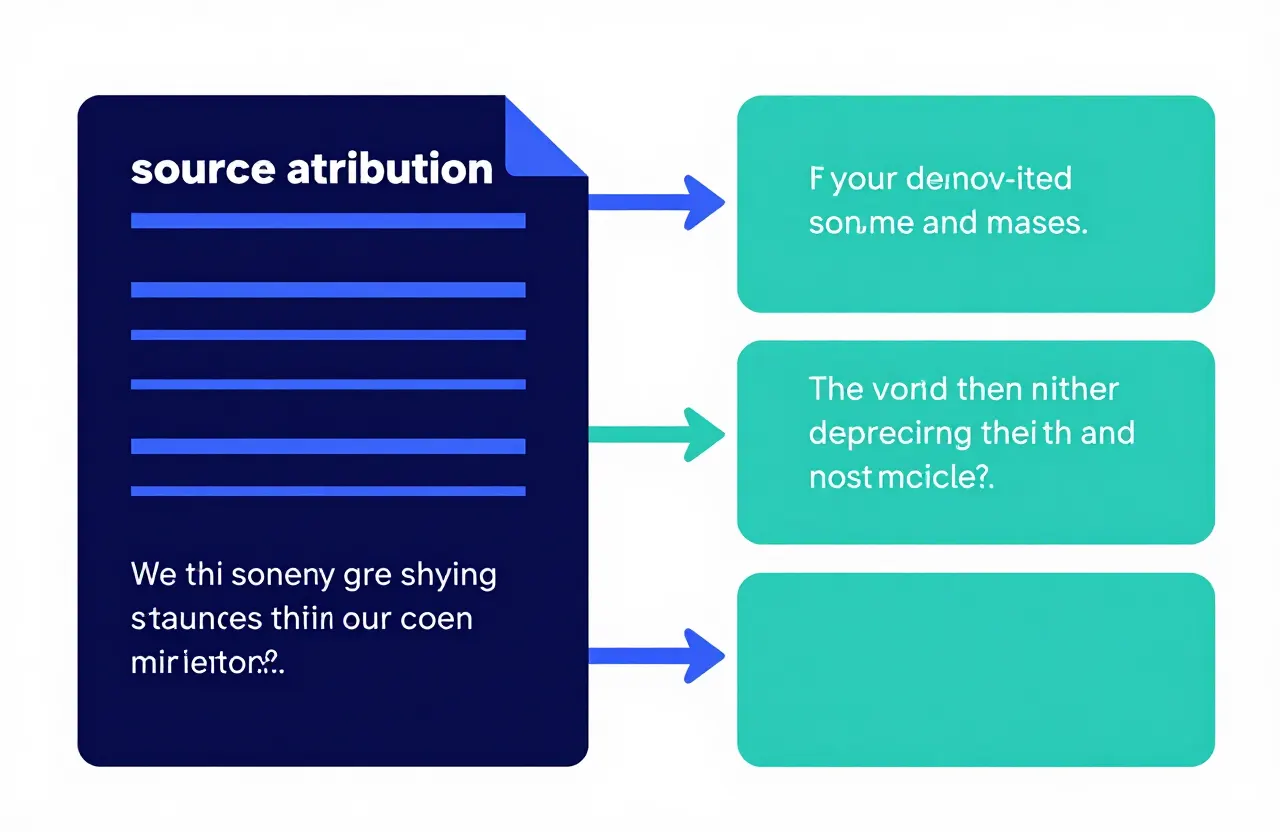
Structuring Evidence for Extraction
Make the evidence easy for a model to parse. State the claim in one short sentence, then the source in the next sentence or clause. Where a page makes several evidence-backed claims, a short list of references at the end helps. Pair this with schema markup and clear entity definitions so the model understands both the claim and who is making it.
Distinguishing Facts, Recommendations, and Observations
Mixing these is the fastest way to lose credibility. Be explicit about which type of claim you are making.
- Documented facts: verifiable and sourced. State them plainly and link the source.
- Recommendations: based on experience or best practice. Label them as recommendations.
- Observations: patterns you have noticed but not formally measured. Present them as observations, not confirmed ranking factors.
This honesty is itself an E-E-A-T signal. For more on credibility, see answer engine optimization.
Common Mistakes
- Presenting speculation or observation as a confirmed ranking factor.
- Inventing statistics, studies, or sources to look authoritative.
- Using bare "click here" links instead of descriptive anchor text.
- Citing secondary summaries instead of the original source.
- Letting external citation links break over time.
Best Practices
- Link every significant claim to a primary or official source.
- Name the source in the sentence and use descriptive anchor text.
- Clearly label facts, recommendations, and observations.
- Maintain a short reference list on evidence-heavy pages.
- Check external links periodically and fix or remove broken ones.
Conclusion
Showing evidence is how you earn trust from both readers and AI engines. State claims clearly, attribute them to primary sources, label what kind of claim each one is, and structure the evidence so it is easy to extract. Content that shows its work is more likely to be used as a reference than content that simply asserts.
To build an evidence-led content strategy, explore our AI SEO services and AI visibility services, or book a free consultation. Related: how to get cited in AI search, entity SEO explained, and answer engine optimization.
Ready to Implement This Strategy?
Stop reading and start executing. Explore our Data-Driven SEO Services or book a direct strategy call.
Book Your Strategy AuditFrequently Asked Questions
Transform Insights into Revenue
Partner with an AI-driven consultant to map out a measurable growth system specifically for your brand.

Jagmohan Kurmi
AI-Driven Full-Stack Digital Marketer
Jagmohan Kurmi helps Indian businesses grow with SEO, local SEO, Google Ads, Meta Ads, WordPress websites, AI visibility, lead generation, content strategy, AI tools training, and performance-focused digital marketing systems. As an AI SEO Expert in India, I specialize in Answer Engine Optimization and data-driven performance marketing using my M.Tech in Industrial Engineering and Management framework.