How to Demonstrate E-E-A-T Signals for AI Search
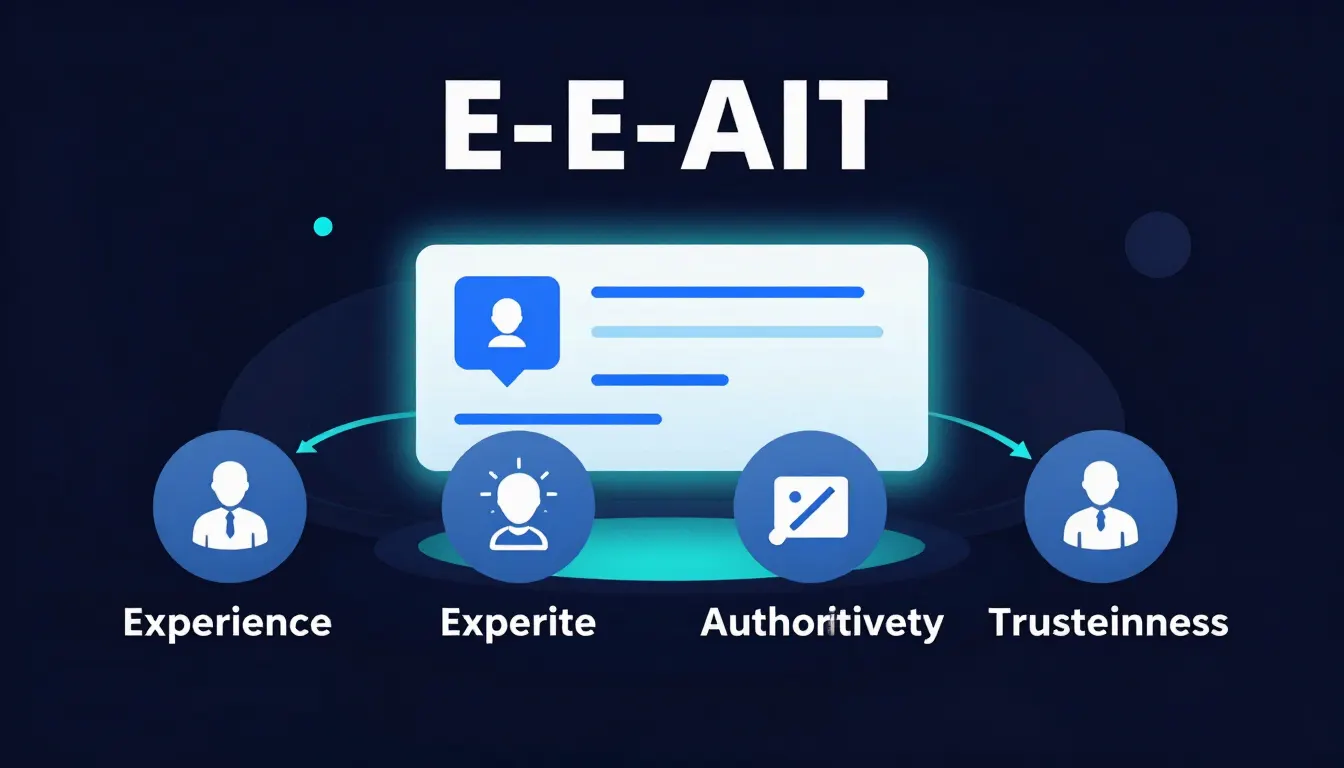
AI search engines do not just match keywords. They try to surface content from sources that are experienced, expert, authoritative, and trustworthy. Google calls this E-E-A-T, and it shapes both traditional rankings and which sources get cited inside AI Overviews. The challenge is that E-E-A-T is not a single tag you add. It is a set of signals you demonstrate over time through how you write, structure, and prove your content. This guide shows how to do that honestly.
Quick Answer: What Is E-E-A-T for AI Search?
E-E-A-T stands for Experience, Expertise, Authoritativeness, and Trustworthiness. For AI search, you demonstrate it by showing first-hand experience in your content, making your expertise visible through author profiles and credentials, building authority through mentions and links from respected sources, and establishing trust through accurate information, transparent contact details, and consistent business data. None of this can be faked with a tag; it has to be real and visible.
Why E-E-A-T Matters More in AI Search
In traditional search, a page could rank largely on relevance and links. In AI search, the engine has to decide which sources to synthesize and cite. When multiple pages say similar things, the model favors the one that appears more credible and better evidenced. That makes E-E-A-T signals a tiebreaker. Google's helpful content guidance and the search quality rater guidelines both emphasize these qualities, so demonstrating them aligns with documented expectations rather than guesswork.
For the broader context of how AI engines evaluate content, read how AI search evaluates content relevance.
The Four Signals, Broken Down
1. Experience
Experience means the content reflects first-hand involvement. AI engines and quality raters look for signs the author actually did the thing they are writing about. Demonstrate experience by:
- Sharing specific steps, tools, and outcomes from real work.
- Using original examples, screenshots, and process descriptions rather than generic advice.
- Writing in a practical, instructional voice that shows you have done it.
- Avoiding vague phrases like "many businesses find" without specifics.
For how to do this concretely, see how to use original examples in AI search content and how to show evidence in AI search content.
2. Expertise
Expertise means the author is qualified on the topic. Make expertise visible, do not assume it is obvious. Demonstrate expertise by:
- Adding a real author bio with relevant background, not a generic placeholder.
- Linking the author to a dedicated author page or profile.
- Listing genuine credentials, certifications, and years of practice, only real ones.
- Using Person schema that connects the author to their work and organization.
Never invent credentials, awards, or qualifications. Faking expertise is the fastest way to destroy trust if anyone checks, and AI engines increasingly cross-reference claims.
3. Authoritativeness
Authority is what others say about you. You build it over time through recognition from respected sources. Demonstrate authority by:
- Earning mentions and links from industry publications, directories, and peers.
- Being cited or quoted in places the AI engine already trusts.
- Building topical authority by covering one subject deeply across a cluster.
- Keeping your entity consistent so the engine recognizes you as a single authoritative source.
4. Trustworthiness
Trust is the foundation. Without it, the other three signals matter less. Demonstrate trust by:
- Providing accurate, up-to-date information with clear publish and update dates.
- Showing transparent contact details, a real address, and working phone or WhatsApp.
- Citing primary sources for any claim, especially statistics or official guidance.
- Keeping business information consistent everywhere, see how to correct wrong business information in AI search.
- Using HTTPS, having a clear privacy policy, and avoiding deceptive patterns.
How to Make E-E-A-T Visible to AI Engines
AI engines read both your content and your structured data. Make the signals machine-readable:
- Add Person and Organization schema: Define who you are, your role, and your credentials. See schema markup for AI search.
- Use Article schema with author attribution: Connect each article to a real author entity.
- Link author bios to profiles: Connect your author entity to LinkedIn and other credible profiles via
sameAs. - Show dates: Use visible publish and update dates and match them in schema.
- Cite sources inline: Link to primary sources with descriptive anchor text.
A Simple E-E-A-T Audit for One Page
Run any important page through these questions:
- Can a reader tell who wrote this and why they are qualified?
- Does the content show first-hand experience or just generic advice?
- Are claims backed by cited primary sources?
- Is the business contact and identity information clear and consistent?
- Would a careful reader trust this page more than a competing one?
If any answer is no, that is your next content task. For a broader readiness check, see the AI search readiness checklist for 2026.
Common E-E-A-T Mistakes
- Faking credentials or awards: Invented qualifications collapse trust the moment they are checked.
- Using generic author bios: "The Team" or "Admin" tells the engine nothing about expertise.
- Adding Person schema but no visible bio: Schema should reflect real visible content, not exist in isolation.
- Copying content and adding authorship: Experience cannot be claimed for work you did not do.
- Ignoring consistency: Conflicting business details across the web undermine trustworthiness.
- Outdated content with no update dates: Stale advice on changing topics signals neglect.
Best Practices
- Write from real experience and use specific, verifiable details.
- Keep author bios honest, specific, and linked to real profiles.
- Cite primary sources for every factual claim.
- Refresh important pages regularly and show update dates.
- Build authority through genuine mentions, not link schemes.
- Make trust signals visible to humans and machines alike.
Limitations to Understand
E-E-A-T is a framework, not a ranking factor you can toggle. You cannot add a tag and become authoritative. The signals compound over months as you publish evidenced content, earn real mentions, and keep your information consistent. Also, E-E-A-T matters more for topics where trust is critical, such as health, finance, legal, and professional services, and somewhat less for entertainment or hobby content. Match your effort to your topic's stakes.
Conclusion
Demonstrating E-E-A-T for AI search means making your real experience, expertise, authority, and trust visible to both readers and machines. Write from first-hand experience, attribute content to qualified real authors, cite primary sources, keep your business information consistent, and use Person and Organization schema to make it all machine-readable. None of this is a shortcut, and none of it can be faked, which is exactly why it works as a durable trust signal.
If you want help strengthening the E-E-A-T signals on your key pages, explore our AI SEO services or book a free SEO consultation. For related reading, see how to build AI search visibility and how to show evidence in AI search content.
Ready to Implement This Strategy?
Stop reading and start executing. Explore our Data-Driven SEO Services or book a direct strategy call.
Book Your Strategy AuditFrequently Asked Questions
Transform Insights into Revenue
Partner with an AI-driven consultant to map out a measurable growth system specifically for your brand.

Jagmohan Kurmi
AI-Driven Full-Stack Digital Marketer
Jagmohan Kurmi helps Indian businesses grow with SEO, local SEO, Google Ads, Meta Ads, WordPress websites, AI visibility, lead generation, content strategy, AI tools training, and performance-focused digital marketing systems. As an AI SEO Expert in India, I specialize in Answer Engine Optimization and data-driven performance marketing using my M.Tech in Industrial Engineering and Management framework.