How AI Search Evaluates Content Relevance
Content relevance in AI search is the measure of how well a page answers the actual intent behind a question, as judged by a model that reads and synthesizes many sources at once. Unlike traditional ranking, which weighs page-level signals heavily, AI relevance evaluation is about meaning, clarity, and how directly a page resolves the query. Understanding this shift helps you write content that AI engines like Google AI Overviews, ChatGPT, Gemini, and Perplexity can extract and reference with confidence.
Quick Answer: How Does AI Search Evaluate Content Relevance?
AI search evaluates relevance by matching the intent of a query to the meaning of a page, weighing topical depth, answer clarity, entity consistency, source authority, and technical accessibility. It does not match keywords alone. A page is relevant when a model can extract a direct, trustworthy answer to the question and place it in the right context. Clear structure, answer-first writing, and consistent entity signals all increase relevance.
This article is part of our AI Visibility cluster. For the foundations, read what is AI SEO and how to build AI search visibility.
Table of Contents
- What content relevance means in AI search
- The signals AI engines use to judge relevance
- Intent matching versus keyword matching
- How structure affects relevance scoring
- Practical steps to improve relevance
- Common mistakes
- Best practices
- FAQs
What Content Relevance Means in AI Search
In traditional search, relevance was largely about whether a page contained the query phrase and earned enough authority to rank for it. In AI search, relevance is about whether a page meaningfully resolves the question a person is asking. A model reads the page, extracts the answer, and decides whether that answer is on-topic, complete, and trustworthy enough to include in a generated response. A page can contain the exact keyword and still be judged irrelevant if the answer is buried, vague, or off-intent.
This is why the unit of optimization has shifted from the keyword to the answer. Google's Search Central guidance on AI Overviews continues to emphasize helpful, people-first content, which aligns with this meaning-first evaluation.
The Signals AI Engines Use to Judge Relevance
No engine publishes its exact formula, and any claim of a guaranteed relevance signal is false. Based on how retrieval-augmented generation works and on public guidance, the signals that consistently influence relevance are:
- Topical depth: Coverage of the subject across related, interlinked pages signals that a site knows the topic. See topical authority for AI search.
- Answer clarity: A direct, self-contained answer near the relevant heading is easier to extract than a buried one.
- Entity consistency: Clear, unambiguous definitions of people, organizations, and concepts help the model place the page correctly. See entity SEO explained.
- Source authority: Links, mentions, and a credible author identity raise confidence in the answer.
- Technical accessibility: A crawlable, fast, indexable page with schema markup is easier to retrieve and parse.
Intent Matching Versus Keyword Matching
The biggest shift in AI relevance is intent matching. A query like "best way to fix a leaky faucet" has an intent: the person wants a practical repair method. A page that repeats the phrase "best way to fix a leaky faucet" but only sells plumbing services is not relevant to the intent. A page that lists clear, ordered repair steps is relevant even if it uses slightly different wording. Write to the intent, not to the keyword.
Practical intent categories to plan around:
- Informational: The person wants to understand something. Answer with a clear explanation and supporting detail.
- How-to: The person wants steps. Answer with an ordered, actionable process.
- Comparison: The person wants to choose. Answer with a balanced, structured comparison.
- Definitional: The person wants a term explained. Answer with a concise definition first, then context. See answer engine optimization.
How Structure Affects Relevance Scoring
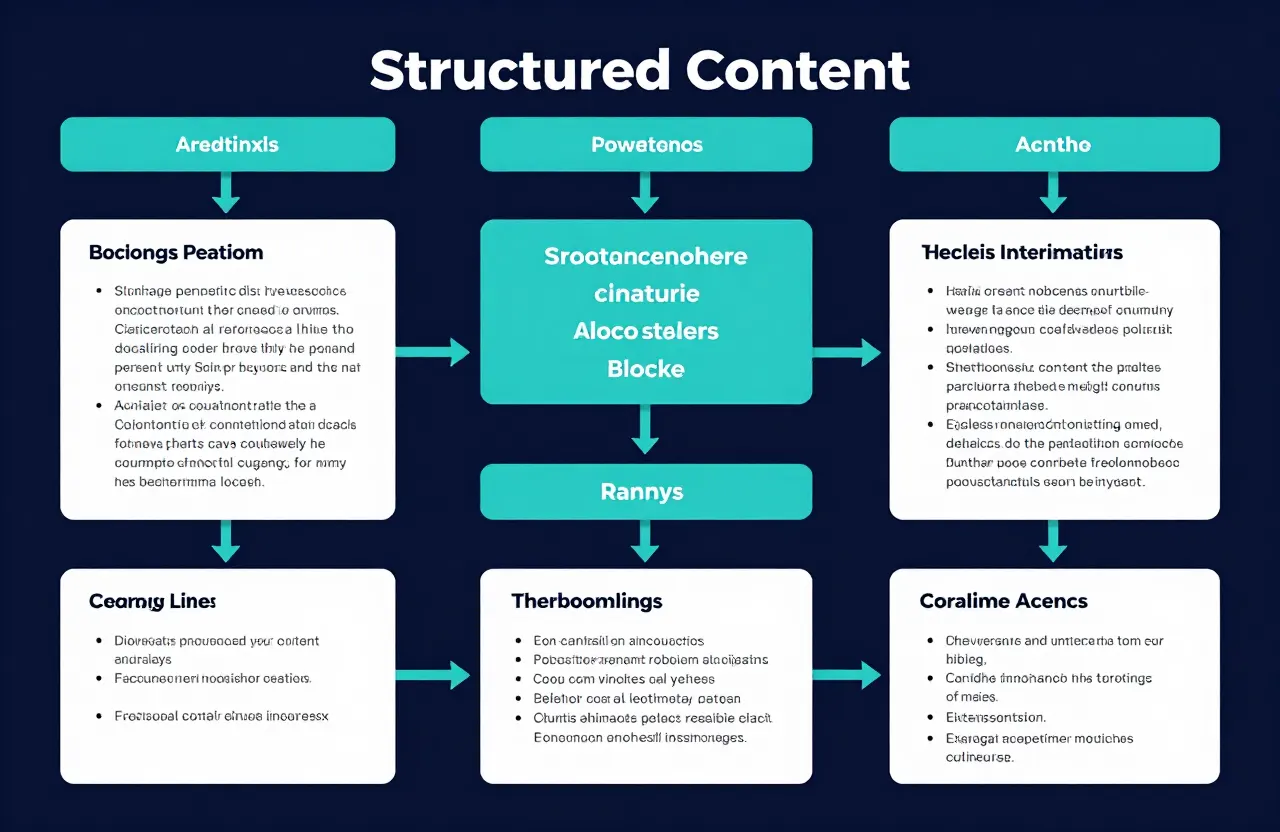
Models parse structure to locate the answer. A page with a question-style H2 followed by a 40 to 60 word direct answer, then supporting detail, gives the model a clean extraction target. Lists, tables, and short paragraphs are easier to parse than long, undifferentiated blocks. Schema adds a machine-readable layer that reinforces what the content is about, but it does not substitute for a clear written answer.
Practical Steps to Improve Relevance
- Identify the true intent: For each target question, write down what the person actually wants to achieve before writing.
- Answer first: Put a direct, self-contained answer immediately under the question heading.
- Structure for extraction: Use question-style H2s, short paragraphs, lists, and tables.
- Define entities: Name organizations, people, and concepts clearly and consistently, and back them with schema.
- Build topical depth: Cover the subject across a cluster of interlinked pages rather than one isolated article.
- Test in real engines: Search your target question in Google, ChatGPT, and Perplexity, note which sources are cited, and refine.
Common Mistakes
- Optimizing for the keyword phrase instead of the intent behind it.
- Burying the answer under long introductions or unrelated context.
- Adding schema while leaving the written answer vague or incomplete.
- Writing one thin page on a broad topic instead of a depth cluster.
- Treating relevance as a one-time fix instead of testing and refining over time.
Best Practices
- Write the answer first, then expand with evidence and examples.
- Keep entity names and details consistent across every page and profile.
- Use question-style headings that mirror how people actually ask.
- Pair clear writing with matching Article, FAQ, and Organization schema.
- Re-check relevance by querying real AI engines after each major update.
Conclusion
AI search evaluates relevance by meaning, not by keyword matching. The pages that win are the ones that directly resolve the intent behind a question, are structured for easy extraction, and sit inside a consistent, authoritative topical cluster. Make the answer obvious, define your entities, and build depth around the subject.
For a structured plan to improve your AI relevance, explore our AI SEO services or book a free SEO consultation. Related reading: how to get cited in AI search and answer engine optimization guide.
Ready to Implement This Strategy?
Stop reading and start executing. Explore our Data-Driven SEO Services or book a direct strategy call.
Book Your Strategy AuditFrequently Asked Questions
Transform Insights into Revenue
Partner with an AI-driven consultant to map out a measurable growth system specifically for your brand.

Jagmohan Kurmi
AI-Driven Full-Stack Digital Marketer
Jagmohan Kurmi helps Indian businesses grow with SEO, local SEO, Google Ads, Meta Ads, WordPress websites, AI visibility, lead generation, content strategy, AI tools training, and performance-focused digital marketing systems. As an AI SEO Expert in India, I specialize in Answer Engine Optimization and data-driven performance marketing using my M.Tech in Industrial Engineering and Management framework.