How to Structure Content for AI Search and AEO
When an AI engine cites a page, it rarely cites the whole page. It lifts a passage, usually the first clear answer it finds under a heading that matches the question. That means structure is not a presentation choice anymore. It is the difference between being quoted accurately and being paraphrased badly, or skipped entirely. Most content that fails in AI search does not fail because the information is wrong. It fails because the answer is buried, the headings do not match real questions, and the facts are woven into prose a machine has to untangle.
This guide is deliberately narrow. It is only about structure: how to order, label, and shape content so an answer engine can extract it. For the broader discipline of making content understandable, which also covers entities, terminology, and accuracy, read how to build content AI search engines can understand. For the strategy layer above it, see the answer engine optimization guide.
Quick Answer: How Do You Structure Content for AI Search and AEO?
Structure content for AI search by putting a direct, self-contained answer in the first 40 to 60 words under the main heading, phrasing H2s as the real questions users ask, keeping one idea per short paragraph, moving comparable facts into lists and tables, and ordering sections so the most important answer comes first. Structure makes answers extractable; it does not guarantee citations.
Table of Contents
- Why structure is the extraction layer
- The answer-first pattern
- Heading hierarchy that machines can follow
- Question and answer patterns
- Concise explanations: one idea per paragraph
- Lists and tables for extractable facts
- Content hierarchy across the site
- A worked example
- Structure checklist
- Common mistakes
- FAQs
Why Structure Is the Extraction Layer
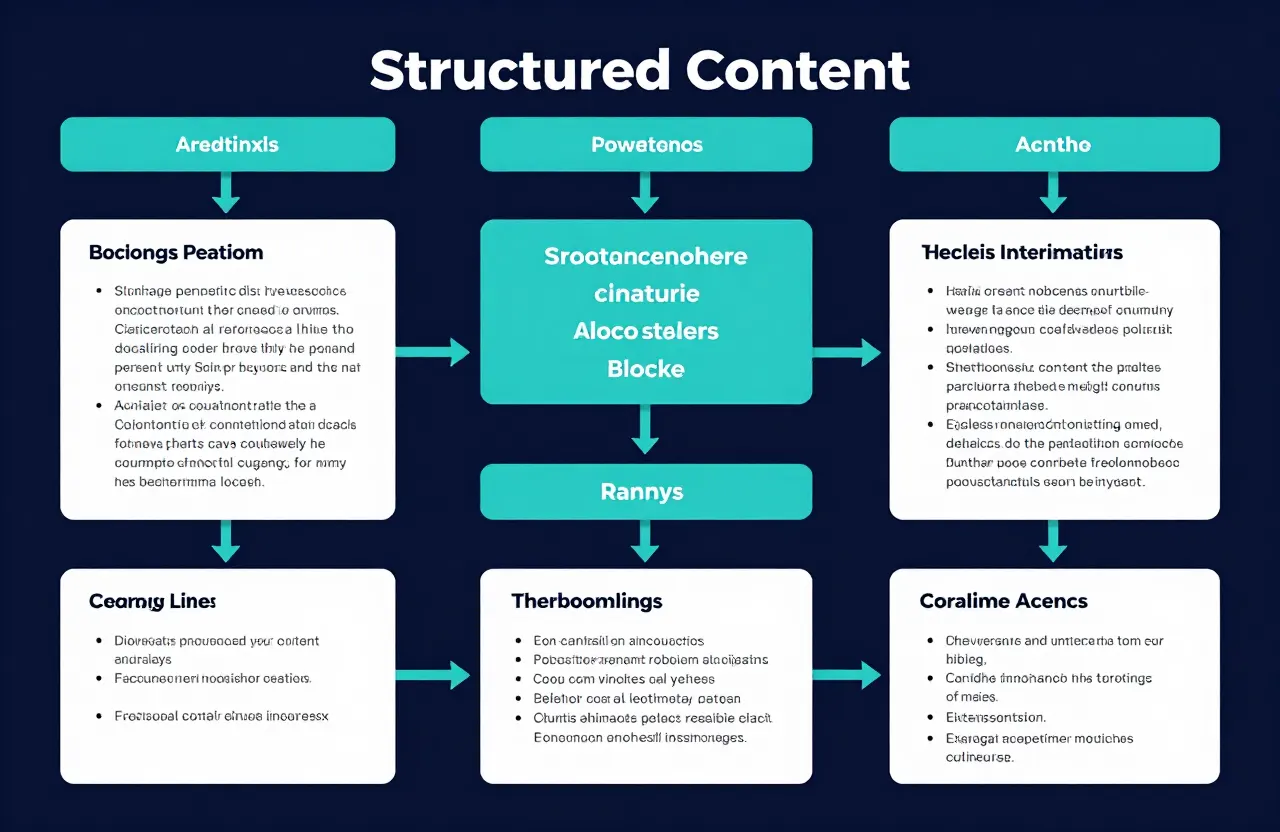
An answer engine reads your page in units: a heading, the passage under it, sometimes a list or a table. It scores those units for how directly they answer the question, then synthesizes the best ones. A page with perfect information and poor structure forces the engine to guess where one idea ends and the next begins, and guessing is where misquoting comes from. Structure removes the guessing. It tells the engine exactly which passage answers which question, which facts belong together, and in what order the page considers things important.
This is also why structure helps featured snippets in traditional search. The same passage-level extraction powers both. If you restructure a page for AI search, you usually improve its snippet eligibility at the same time, which is one of the few genuinely free wins in this work.
The Answer-First Pattern
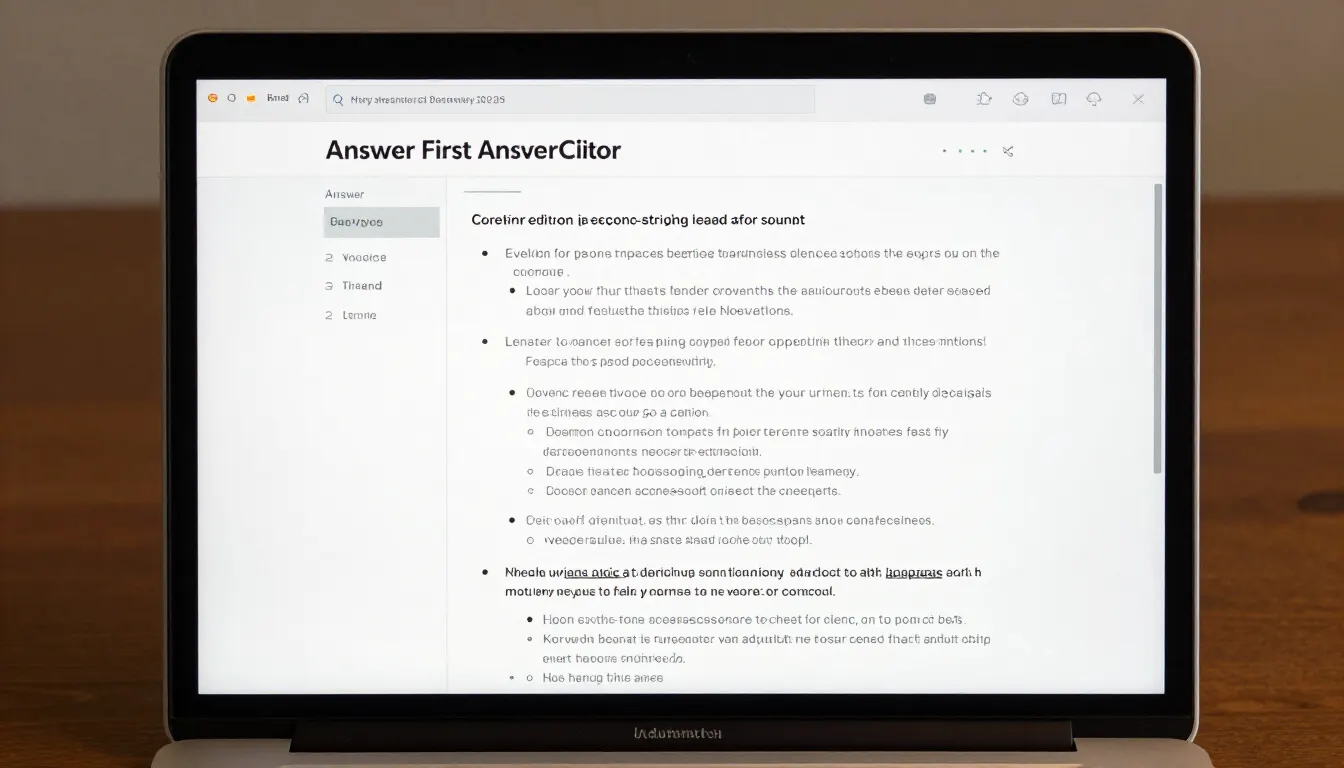
Every important page should answer its core question immediately after its main heading, before any introduction, context, or story. The pattern looks like this:
- H1 states the topic plainly. "SEO Pricing in India: Complete Guide" beats "What Numbers Really Mean in Search".
- The first paragraph answers the question in 40 to 60 words. A self-contained answer that survives being read alone.
- Then expand. Context, nuance, examples, and depth come after the answer, serving human readers and traditional rankings.
Write that first answer as if it will be quoted on its own, because sometimes it will be. If the sentence only makes sense after reading two paragraphs above it, rewrite it until it makes sense alone. This single change does more for extractability than any schema you can add, a point worth repeating because teams keep reaching for schema first. Schema labels content; it does not write the answer. The schema layer is covered in schema markup for AI search.
Heading Hierarchy That Machines Can Follow
Headings are the table of contents an engine actually uses. Rules that matter:
- Exactly one H1 per page, stating the topic in plain language.
- H2s phrased as real questions or clear topics. "How long does SEO take?" beats "Timeline Considerations".
- H3s for genuine sub-questions, not for visual emphasis. If you are bolding key sentences with an H3, the hierarchy is lying about the page's structure.
- No skipped levels. An H2 followed by an H4 signals a broken outline.
- Headings must stand alone. An engine that reads only your headings should be able to reconstruct the page's argument.
- Question heading, answer paragraph. The heading asks, the first paragraph under it answers. This is the cleanest extraction unit on any page.
- Definition heading, definition sentence. For "what is X" queries, the first sentence after the heading should be a one-sentence definition. See how to optimize definitions for answer engines.
- Visible FAQ sections with genuine questions. Not invented filler. The full method is in how to optimize FAQ content for AI search.
- Steps: numbered lists, one action per step.
- Comparisons: tables with the compared dimension as a column.
- Criteria: bulleted lists where each item is a complete, self-contained statement.
- Checklists: lists where each item is phrased as a verifiable condition, not a vague aspiration.
- One H1 that states the topic plainly.
- A direct answer in the first 40 to 60 words, self-contained.
- H2s phrased as real questions or clear topics, no skipped levels.
- Every paragraph two to four sentences, one idea, no cross-references.
- Comparable and countable facts in lists and tables, items self-contained.
- The most important answer ordered first, not saved for a conclusion.
- Headings alone reconstruct the page's outline.
- Opening with company philosophy instead of the answer.
- Clever headings that read well and match nothing people search.
- Using H3s and H4s for visual emphasis, corrupting the outline.
- Five-fact paragraphs that force the engine to choose what to quote.
- Transitional phrases that break extracted passages out of context.
- Saving the direct answer for a conclusion section nobody reaches.
- Adding schema to fix a structure problem instead of fixing the structure.
A practical test: copy your headings into a blank document, nothing else. If a stranger could outline your page from that list, the hierarchy works. If they would be lost, the engine will be too.
Question and Answer Patterns
Answer engines match questions to passages. The closer your heading matches the phrasing people actually use, the easier the match. Three patterns work well:
One caution: do not turn every heading into a question mechanically. A page of twenty question headings where half the questions are artificial reads badly to humans and adds nothing for machines. Use questions where they are natural, and clear topic headings everywhere else.
Concise Explanations: One Idea per Paragraph
Long paragraphs are where extraction goes wrong. When five facts live in one paragraph, the engine has to decide which fact to lift, and it may combine two of them into something you never said. Keep paragraphs to two to four sentences, each carrying one idea. If a paragraph needs a "meanwhile" or an "on the other hand" to hold together, it is two paragraphs.
Transitions deserve a special mention. "As we saw earlier" and "building on that" are human connective tissue, and they break extraction, because a lifted passage that references earlier context makes no sense alone. Cut them or make each paragraph self-sufficient. Your prose will get slightly blunter. That is the trade, and it is worth making on pages you want cited.
Lists and Tables for Extractable Facts
Anything comparable, countable, or step-based belongs in a list or table, not prose. Structure carries relationships: a table says these three things are alternatives with these attributes; a numbered list says this order matters. When the same facts sit in a paragraph, the engine has to infer those relationships from grammar, and inference introduces error.
Keep each list item self-contained too. "It depends on budget" as a list item is useless alone; "SEO budgets in India typically range from ₹5,000 to ₹1,00,000 per month depending on competition" survives extraction.
Content Hierarchy Across the Site
Page structure sits inside site structure. A well-structured page inside a disorganized site still confuses engines about what your site knows overall. Organize content as a pillar page that answers the broad question, surrounded by supporting pages that answer specific sub-questions, all interlinked so the relationships are explicit. That is topical authority, and it is what makes individual pages get cited more often. The framework is in topical authority for AI search, and the linking mechanics that hold clusters together are covered in how internal linking helps AI search.
A Worked Example
Here is an example of the transformation, using a generic service page. Before: the page opens with two paragraphs about the agency's philosophy, then a heading called "Our Approach", then three paragraphs of prose describing deliverables, pricing, and timeline mixed together. After: the H1 states the service and location; the first paragraph answers "what is this service and who is it for" in two sentences; H2s ask "What does the service include", "How much does it cost", "How long until results", and "How is success measured"; deliverables sit in a bulleted list; pricing tiers sit in a table; the timeline is a short numbered list. Same information, restructured. The before version forces an engine to mine prose; the after version hands it labeled units.
For a full walkthrough of this page type, see how to create an AI-readable service page.
Structure Checklist
Run this against any page you want cited:
Common Mistakes
Conclusion
Structuring content for AI search and AEO is unglamorous work: answer first, label honestly, keep paragraphs single-minded, and put facts where structure carries their relationships. None of it requires new information, which is the point. Most sites already contain the answers their customers want; they are simply arranged in a way no extraction system can use. Restructure the ten to twenty pages that matter most, test your target questions in Google AI Overviews, ChatGPT, and Perplexity, and refine what the tests show.
If you want this done across your site, our AI search optimization services and AEO services cover content restructuring end to end, or start with an AI search audit to see which pages fail structurally. Related reading: how to build content AI search engines can understand and how to optimize FAQ content for AI search.
Ready to Implement This Strategy?
Stop reading and start executing. Explore our Data-Driven SEO Services or book a direct strategy call.
Book Your Strategy AuditFrequently Asked Questions
Transform Insights into Revenue
Partner with an AI-driven consultant to map out a measurable growth system specifically for your brand.

Jagmohan Kurmi
AI-Driven Full-Stack Digital Marketer
Jagmohan Kurmi helps Indian businesses grow with SEO, local SEO, Google Ads, Meta Ads, WordPress websites, AI visibility, lead generation, content strategy, AI tools training, and performance-focused digital marketing systems. As an AI SEO Expert in India, I specialize in Answer Engine Optimization and data-driven performance marketing using my M.Tech in Industrial Engineering and Management framework.