How Internal Linking Helps AI Search Understand Website Topics

Ask most people what internal linking does and they say it spreads PageRank. That answer is twenty years old and it misses what internal links do now. When an AI engine reads your site, your internal links are the clearest statement you make about your own content: this page is about that, these two pages are related in this way, and this one is the center of the topic. External links tell engines what others think of you. Internal links tell engines what you think of yourself, and no one else can make that statement.
That is why two sites with similar content can get treated so differently by AI search. One has a pillar page connected to a dozen specific supporting articles with descriptive links; the other has the same articles floating unconnected, reachable only through blog pagination. The first site reads as an authority on a topic. The second reads as a pile of pages. Same content, different internal linking.
Quick Answer: How Does Internal Linking Help AI Search?
Internal linking helps AI search by making topical relationships explicit: descriptive anchor text tells an engine what the linked page is about, contextual links connect related pages into a topical cluster, links from a pillar page signal which pages are central to a topic, and crawl paths ensure every page can be discovered. Fix orphan pages, use descriptive anchors, and link related content together so an engine can map what your site covers.
Table of Contents
- What internal links tell an engine
- Anchor text: the label on the link
- Contextual links versus navigation links
- Pillar and supporting content clusters
- Internal links as crawl paths
- Orphan pages
- How to audit your internal linking
- Common mistakes
- FAQs
What Internal Links Tell an Engine
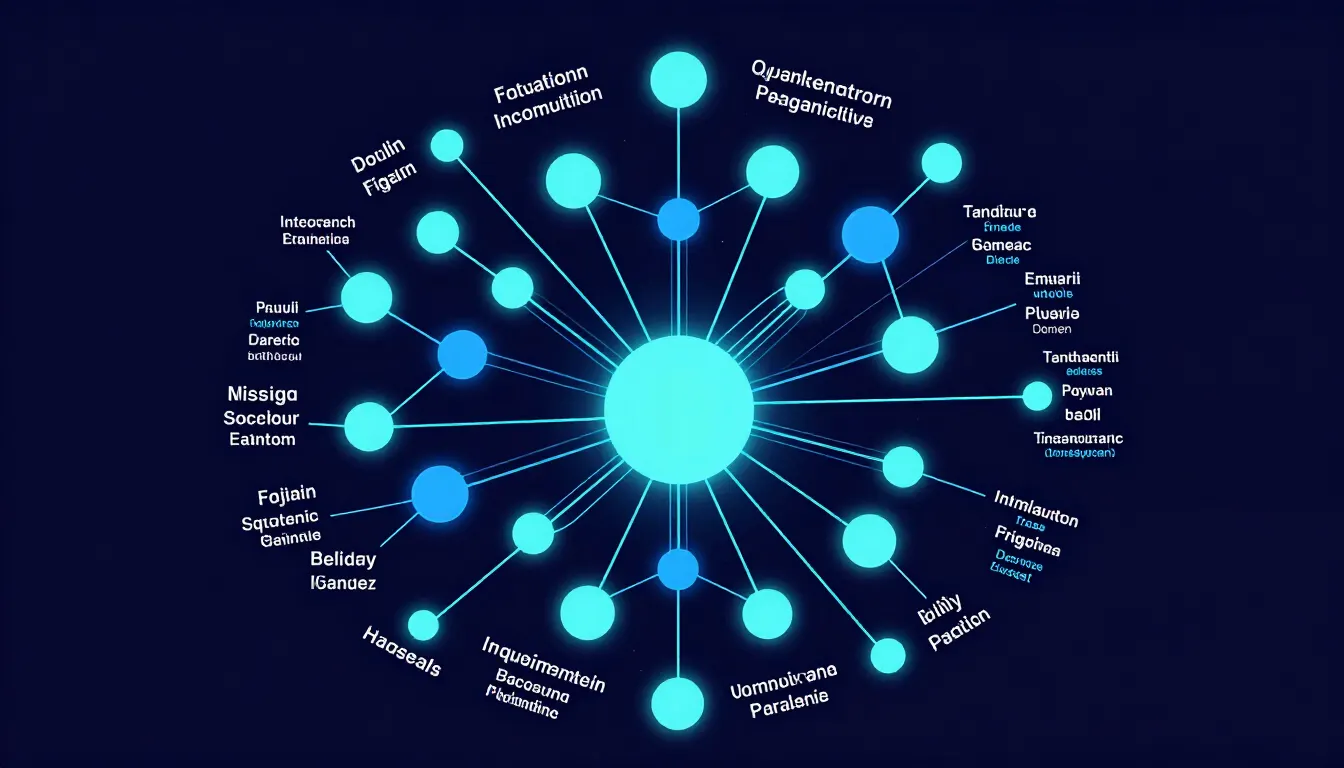
Every internal link carries three pieces of information an engine uses: the anchor text, which labels the destination page; the surrounding context, which states the relationship between the two pages; and the link's position and frequency, which signal importance. A link from your main services page to an article says more than a link from your footer. Ten pages linking to one guide says this guide is the hub. Engines assembled these signals for years to understand site structure; AI engines reading your site use the same graph to understand your topical coverage.
This is also why internal linking and topical authority are inseparable. A cluster of pages that answers one broad question thoroughly, linked so the relationships are explicit, is what makes an engine treat your site as a source on that topic rather than a site that happens to contain some related pages. The strategy layer is in topical authority for AI search; this guide is the mechanics.
Anchor Text: The Label on the Link
Anchor text is the most underused labeling tool on most sites. Rules that matter:
- Describe the destination. "How to optimize FAQ content for AI search" tells an engine exactly what the linked page covers. "Click here" and "read more" tell it nothing.
- Vary it naturally. The same exact-match anchor repeated fifty times looks manipulative to traditional systems and adds no information for AI ones. A handful of natural variations is healthier and more honest.
- Match the destination's own topic. If the anchor says one thing and the page says another, you have introduced a contradiction into your own site, and engines weigh contradictions heavily. How they do that is covered in how AI search handles conflicting information.
- Link with entities named. "Our AI SEO services" is a stronger anchor than "our services" because it names the entity and the relationship.
Contextual Links Versus Navigation Links
Navigation and footer links say "this page exists on our site". Contextual links inside body content say "this page is related to the thing you are reading, in this specific way". The second statement is far more valuable for topical understanding. A menu link to your SEO services page appears identically on every page of the site, so it carries no page-specific meaning. A sentence in an article about crawlability that says "technical SEO covers this in depth" and links to your technical SEO guide tells the engine those two topics are related and how.
Practical implication: when you publish a new article, the links that matter most are the ones you add from related existing articles into the new one, and from the new article out to its siblings and pillar. Menu placement is fine, but it does not build the topical graph. For how the surrounding navigation itself affects AI understanding, see how to optimize website navigation for AI understanding.
Pillar and Supporting Content Clusters
The structure that pays off in AI search is pillar and supporting content:
- A pillar page answers the broad question ("what is AI SEO") comprehensively and links out to every supporting page.
- Supporting pages each answer one specific sub-question ("how to structure content for AI search", "how to optimize FAQs for AI search") and link back up to the pillar and sideways to siblings.
- Sideways links between siblings make the cluster a web rather than a star, which is what signals genuine topical depth.
- Crawl your own site with any crawler, or export pages from your sitemap and from a site crawl, and compare. Pages in the sitemap but not reachable by links are your orphans.
- For each orphan, decide: does it deserve a place in a cluster? If yes, add contextual links from its most related pages. If it is thin or redundant, improve it or merge it into a better page.
- Repeat the check after every publishing sprint, because every new batch of content creates new potential orphans.
- Map your clusters. List your pillar topics and the pages that belong to each. Pages that belong to no cluster are your first problem.
- Check hub links. Does each pillar link to all its supporting pages, and do they link back?
- Check sibling links. Do related supporting pages link to each other where it is natural?
- Read your anchors. Replace "click here" and "read more" with descriptive anchors. Check for exact-match anchor repetition.
- Find orphans and fix them.
- Check depth. Important pages within a few clicks of the homepage.
- Publishing new content without updating related pages to link to it, creating orphans by default.
- Exact-match anchor text repeated everywhere, which reads as manipulation and adds no information.
- Linking only upward to the pillar, never sideways between siblings, leaving the cluster a star instead of a web.
- Anchor text that contradicts the destination page's actual topic.
- Assuming menu and footer links build topical understanding; they declare existence, not relationships.
- Stuffing so many links into a paragraph that none of them carry meaningful context.
The pattern works because it mirrors how engines organize knowledge: a central entity with related entities connected by explicit relationships. When your site's link graph says the same thing your content says, both signals reinforce each other. When they disagree, scattered pages, no hub, contradictory anchors, the site undercuts itself.
Internal Links as Crawl Paths
Before an engine can understand a page, it has to find it. Internal links are discovery paths: crawlers enter through your homepage or sitemap and follow links outward. Pages many clicks from the entry point, or reachable only through filtered archives, get crawled less often and less deeply. For AI retrieval systems that re-ingest content on their own schedules, a page that is hard to reach is a page that stays stale or invisible.
Keep important pages within a few clicks of the homepage, link to them from more than one place, and make sure your XML sitemap agrees with your link structure. The full mechanics of access, robots.txt, sitemaps, status codes, and rendering, are covered in how website crawlability affects AI search visibility.
Orphan Pages
An orphan page is a page with no internal links pointing to it. It may be in your sitemap, so it is not technically invisible, but it sits outside your site's own topical graph. For AI understanding, an orphan page is essentially a stranger: nothing on your site vouches for what it is about or how it relates to anything else. It ranks and gets cited on its own isolated merits, which usually means it does not.
Orphans happen naturally: a page gets published, the related articles never get updated to link to it, and two years later it is floating alone. The fix is an audit:
How to Audit Your Internal Linking
A practical audit for AI search purposes, done quarterly:
Then test the outcome the way you test everything in this field: ask your target questions in Google AI Overviews, ChatGPT, and Perplexity and see whether your cluster pages appear and how they are described. The method is in how to check your AI search visibility.
Common Mistakes
Conclusion
Internal linking is the cheapest topical authority work available, because it uses content you already have. Make your clusters explicit: pillar at the center, supporting pages around it, descriptive anchors, sideways links where natural, and no orphans. An engine reading that graph gets a clear, self-consistent picture of what your site knows. An engine reading a pile of disconnected pages gets nothing, no matter how good the individual articles are.
If you want your site's topical structure and internal linking rebuilt properly, our AI SEO services cover cluster architecture end to end, and an AI SEO audit will show you where the graph is broken. Related reading: topical authority for AI search and how to structure content for AI search.
Ready to Implement This Strategy?
Stop reading and start executing. Explore our Data-Driven SEO Services or book a direct strategy call.
Book Your Strategy AuditFrequently Asked Questions
Transform Insights into Revenue
Partner with an AI-driven consultant to map out a measurable growth system specifically for your brand.

Jagmohan Kurmi
AI-Driven Full-Stack Digital Marketer
Jagmohan Kurmi helps Indian businesses grow with SEO, local SEO, Google Ads, Meta Ads, WordPress websites, AI visibility, lead generation, content strategy, AI tools training, and performance-focused digital marketing systems. As an AI SEO Expert in India, I specialize in Answer Engine Optimization and data-driven performance marketing using my M.Tech in Industrial Engineering and Management framework.