How to Optimize FAQ Content for AI Search and Answer Engines
FAQ content is the closest thing to a native format for answer engines. When a user asks an AI assistant a question, the engine looks for clear question-answer pairs it can extract and synthesize. Yet most FAQ sections are written as afterthoughts, with vague questions and rambling answers that no model can lift cleanly. Optimizing FAQ content for AI search means treating each question-answer pair as a self-contained, extractable unit. This guide shows how.
Quick Answer: How Do You Optimize FAQ Content for AI Search?
Research real questions your customers ask, write each answer as a self-contained 40 to 60 word response that makes sense out of context, group related questions under clear H2 or H3 headings, add FAQPage schema that mirrors the visible questions and answers exactly, and validate the schema. Keep answers direct, factual, and free of marketing filler so an AI engine can lift them verbatim and cite you as the source.
Why FAQ Content Suits Answer Engines
Answer engines work in question-answer units. A well-written FAQ is already in that format, which makes it easier to retrieve, extract, and synthesize than prose-heavy content. This is why FAQ sections often appear in featured snippets and AI Overviews. But the advantage only holds if the questions are real and the answers are clean. For the broader format, read the answer engine optimization guide and how to optimize definitions for answer engines.
Step 1: Research Real Questions
Never invent questions you think customers should ask. Find the ones they actually ask. Sources:
- Contact form, WhatsApp, and sales call questions.
- "People also ask" boxes for your target keywords.
- Related searches at the bottom of Google results.
- Search Console queries phrased as questions.
- Questions competitors answer in their FAQs.
Group questions by theme so your FAQ has logical sections rather than a random list. Five to ten strong questions beat thirty weak ones.
Step 2: Write Answer-First Responses
Each answer should stand alone. A reader, or a model, should understand it without reading the question above or the page around it. Rules:
- Lead with the direct answer: First sentence answers the question, then expand.
- Keep it 40 to 60 words for the core answer: Short enough to lift verbatim, long enough to be useful.
- Make it self-contained: No "as mentioned above" or "it depends" without context.
- Be factual and specific: Numbers, steps, and definitions beat vague reassurance.
- Avoid marketing filler: "We are the best" adds nothing an engine can use.
For the writing principles, see how to show evidence in AI search content.
Step 3: Structure the FAQ Page
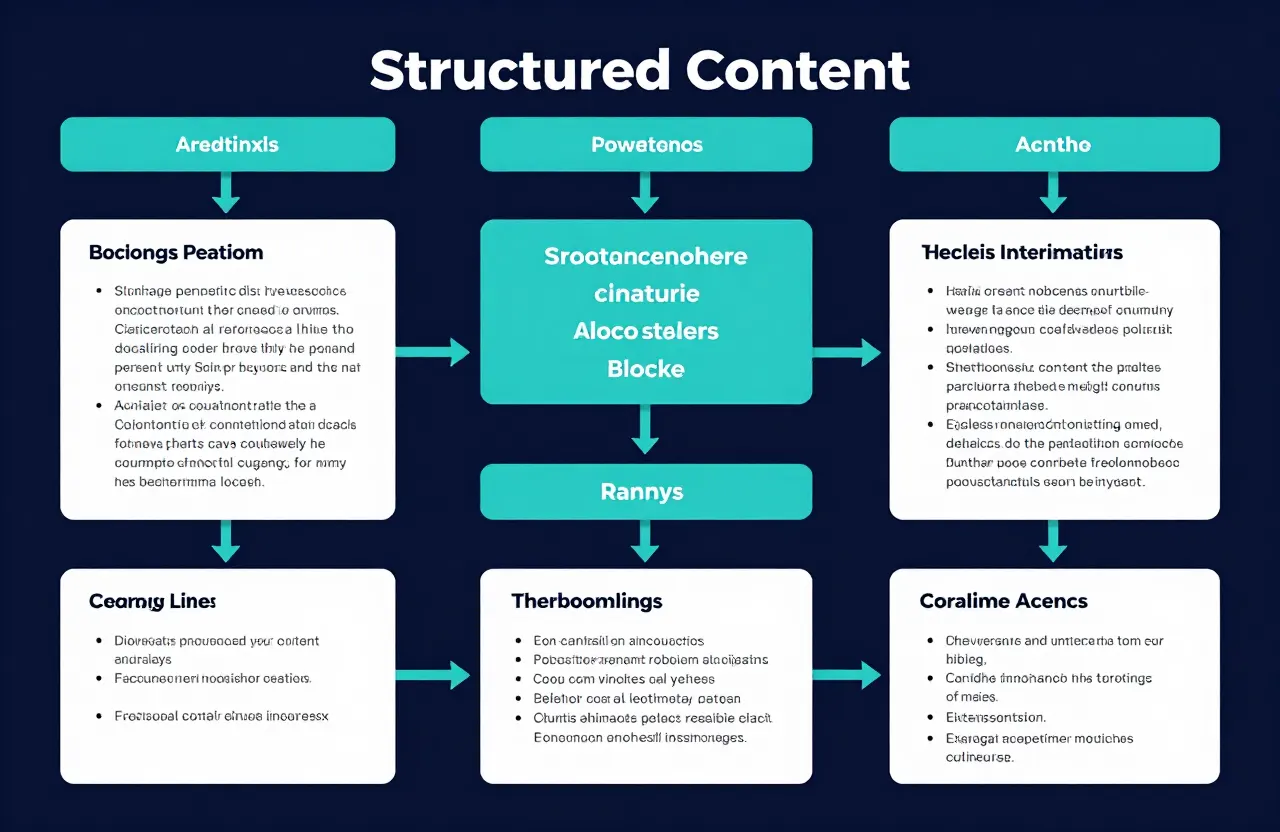
Structure helps both readers and models parse the page:
- Use the question as the heading: H3 for each question, phrased as customers ask it.
- Put the answer directly below: No gap, no image in between.
- Group by theme with H2s: Helps readers scan and engines understand relationships.
- Link to deeper pages: Where an answer needs more depth, link to a full article.
- Keep one question per heading: Do not bundle multiple questions under one H3.
Step 4: Add FAQPage Schema
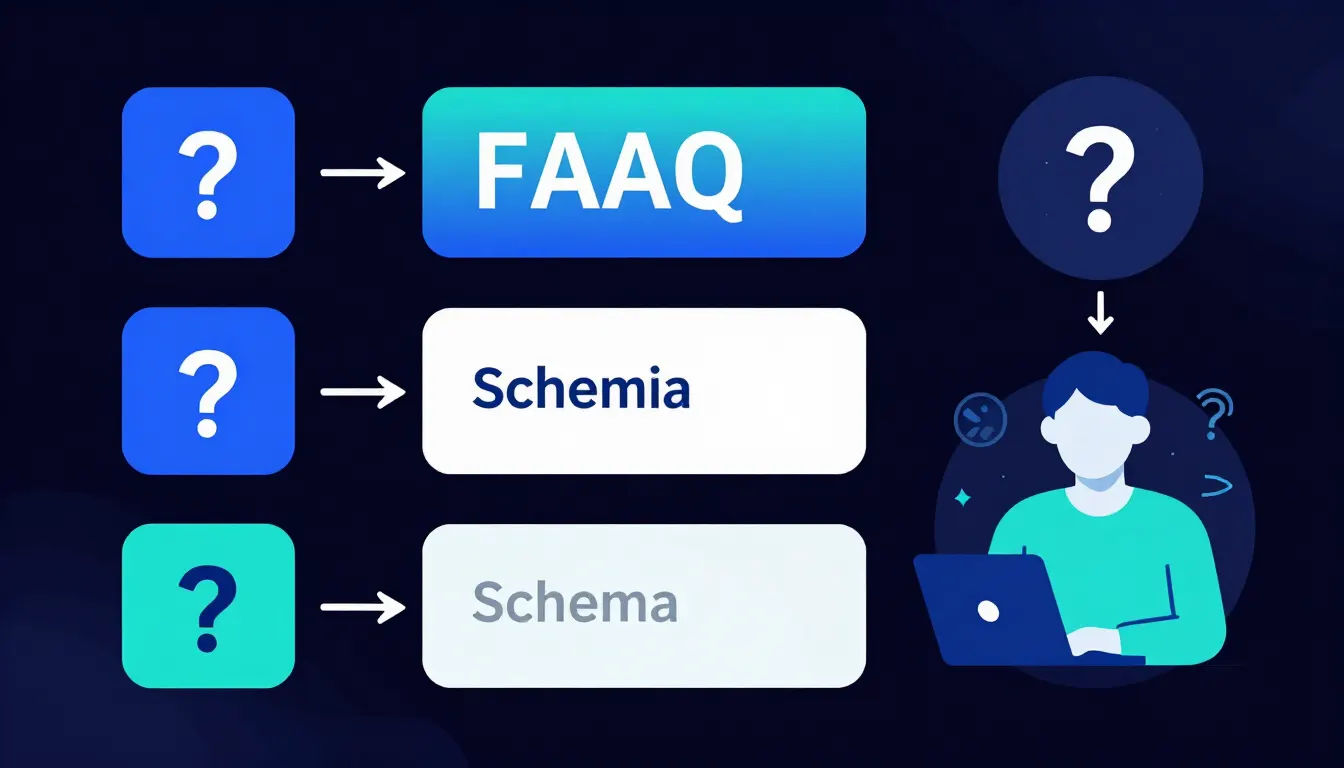
FAQPage schema adds a machine-readable layer on top of your visible questions and answers. It must mirror the visible content exactly, the same questions and the same answers, not a shortened or different version. A minimal structure:
- Use
FAQPageas the type. - Each question is a
Questionwith anamematching the visible heading. - Each answer is an
Answerwithtextmatching the visible answer. - Validate with the Rich Results Test.
For the schema foundation, read schema markup for AI search and the Schema.org FAQPage reference. Google's documentation notes that FAQPage rich results are no longer shown for most sites in search, but the structured data still helps AI engines parse your content, so it remains worth adding.
Step 5: Maintain and Refresh
FAQs go stale. Questions shift, answers need updating, and new questions emerge. Review your FAQ quarterly:
- Add new questions from recent customer interactions.
- Update answers where facts or offerings changed.
- Remove questions no one asks anymore.
- Keep schema in sync with visible content after every change.
For the refresh process, see the AI search content refresh audit.
FAQ Optimization Checklist
| Element | What to Do | Why It Matters |
|---|---|---|
| Questions | Use real customer questions | Matches actual search intent |
| Answers | 40 to 60 words, self-contained | Easy for engines to lift verbatim |
| Headings | One question per H3 | Clean extraction units |
| Grouping | Theme sections with H2s | Logical structure for parsing |
| Schema | FAQPage mirroring visible content | Machine-readable layer |
| Validation | Pass the Rich Results Test | Confirms schema is correct |
Common FAQ Mistakes
- Invented questions: Questions no customer asks never get searched.
- Long, rambling answers: Models cannot lift a three-paragraph answer cleanly.
- Non-self-contained answers: "See above" breaks extraction.
- Schema not matching visible content: Different text in schema than on page causes confusion.
- Marketing filler in answers: "We are the leading provider" is useless to an engine.
- One heading, multiple questions: Bundling breaks the one-question-one-answer unit.
- Stale FAQs: Outdated answers erode trust and accuracy.
Best Practices
- Research questions from real customer interactions and search data.
- Write each answer to stand alone, as if read in isolation.
- Lead with the direct answer, then expand if needed.
- Keep schema and visible content perfectly in sync.
- Validate schema before and after every update.
- Link from short answers to deeper articles for context.
- Refresh quarterly and after any offering change.
Limitations to Be Honest About
FAQPage rich results are no longer shown for most sites in Google search, so do not expect the old expandable FAQ boxes. However, the structured data still helps AI engines parse and extract your answers, so it remains valuable for AI visibility even without the visual rich result. Also, a great FAQ does not guarantee citation; it improves extractability. You still need authority, consistency, and a clean technical foundation. For the full picture, see how to build AI search visibility.
Conclusion
FAQ content is a natural fit for answer engines, but only when it is treated as a set of self-contained, extractable question-answer units. Research real questions, write answer-first responses of 40 to 60 words, structure with one question per heading, add FAQPage schema that mirrors the visible content exactly, validate it, and refresh quarterly. Done this way, your FAQ becomes one of the most citable parts of your site, not an afterthought.
If you want help optimizing your FAQ content and schema for AI search, explore our AI SEO services or book a free SEO consultation. For related reading, see the answer engine optimization guide and schema markup for AI search.
Ready to Implement This Strategy?
Stop reading and start executing. Explore our Data-Driven SEO Services or book a direct strategy call.
Book Your Strategy AuditFrequently Asked Questions
Transform Insights into Revenue
Partner with an AI-driven consultant to map out a measurable growth system specifically for your brand.

Jagmohan Kurmi
AI-Driven Full-Stack Digital Marketer
Jagmohan Kurmi helps Indian businesses grow with SEO, local SEO, Google Ads, Meta Ads, WordPress websites, AI visibility, lead generation, content strategy, AI tools training, and performance-focused digital marketing systems. As an AI SEO Expert in India, I specialize in Answer Engine Optimization and data-driven performance marketing using my M.Tech in Industrial Engineering and Management framework.