What Is AI SEO?
AI SEO is the practice of optimizing your website and content so that AI-powered search systems, Google AI Overviews, ChatGPT, Gemini, Perplexity, and Claude, can discover, understand, and reference your content. It is not a replacement for traditional SEO. It is an extension of it, built on the same foundations but with a sharper focus on clarity, structure, and entity meaning.
Quick Answer: What Is AI SEO?
AI SEO means optimizing content so AI search engines can extract clear answers from it and cite it as a source. It combines traditional ranking fundamentals (fast pages, good content, links) with answer-first writing, structured data, entity clarity, and topical authority. The goal is not to "rank a link" but to help AI systems understand your content well enough to summarize or quote it.
If you are new to the broader field, start with our what is SEO guide first, then come back here.
Table of Contents
- What AI SEO actually means
- How AI search is different from traditional search
- The core components of AI SEO
- How AI systems choose what to cite
- A practical AI SEO workflow
- Common mistakes
- FAQs
What AI SEO Actually Means
Traditional SEO asks: "when someone searches this phrase, which link should Google show first?" AI SEO asks a different question: "when an AI engine tries to answer this question, which sources should it read, trust, and quote?" The output is no longer just a ranked list of links. It is a generated answer, sometimes with citations, sometimes without.
This shifts the unit of optimization. You are no longer optimizing only a page for a position. You are optimizing a piece of content for comprehension by a model that reads many pages at once and synthesizes them. That is why clarity, structure, and consistency matter more than ever.
How AI Search Is Different From Traditional Search
The mechanics overlap, but the output differs in three important ways:
- Output: Traditional search returns links. AI search returns a generated answer, with links as supporting citations.
- Selection: Traditional ranking weighs page-level signals heavily. AI synthesis weighs clarity, authority, and how easily an answer can be extracted.
- Visibility: A click is no longer the only win. Being cited or summarized, even without a click, builds brand recognition and trust.
For a deeper comparison, read SEO vs GEO and ChatGPT SEO vs Traditional SEO.
The Core Components of AI SEO
AI SEO rests on five components. None of them are new, but their relative importance has grown.
1. Answer-first content
Put a direct, self-contained answer to the question near the top of the page, then expand. AI engines pull the first clear answer they find. A 40 to 60 word answer right after the heading improves the likelihood of being referenced.
2. Structured, parseable markup
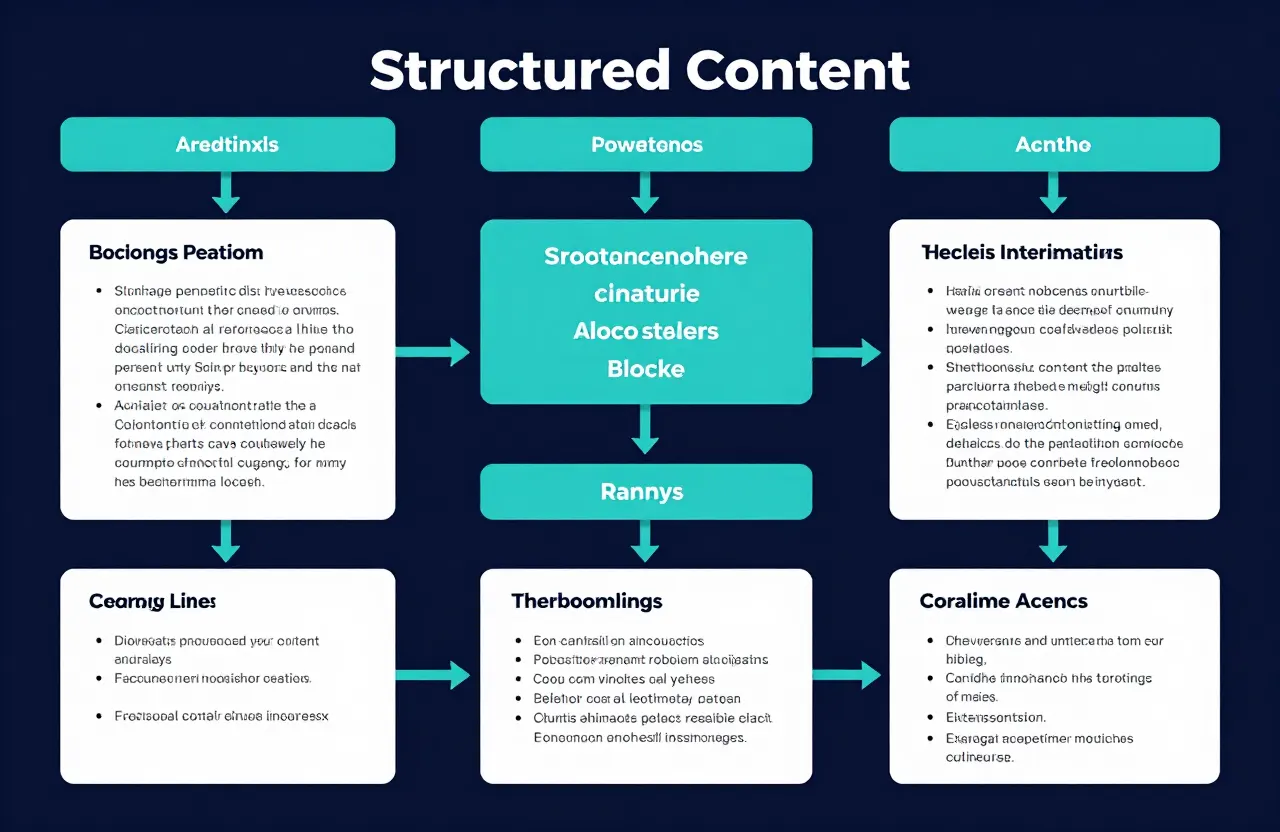
Clear headings, short paragraphs, lists, and tables help models parse your page. Schema markup adds a machine-readable layer on top.
3. Entity clarity
AI systems think in entities (people, organizations, places, concepts). Defining who you are and what you do unambiguously, through entity SEO and consistent structured data, helps them place you correctly.
4. Topical authority
One isolated page rarely gets cited. Covering a topic across a cluster of related, interlinked pages signals depth. See topical authority for AI search.
5. Consistency across the web
AI models learn about you from many sources. If your name, services, and details are consistent everywhere, the model has a clearer picture of your entity.
How AI Systems Choose What to Cite
No system publishes its exact formula, and any claim of guaranteed citations is false. Google's own Search Central guidance recommends continuing to focus on helpful, people-first content. Based on how retrieval-augmented generation works, the factors that consistently matter are:
- A clear, direct answer that is easy to extract.
- Topical relevance and depth on the subject.
- Authority signals (links, mentions, author identity).
- Technical accessibility (crawlable, fast, indexable).
- Entity consistency across the web.
These factors improve eligibility and discoverability. They do not guarantee a citation.
A Practical AI SEO Workflow
- Audit clarity: For each key page, confirm there is a direct answer to the main question in the first paragraph.
- Structure content: Use question-style H2s, lists, and tables. Add FAQ and Article schema.
- Define entities: Add Organization and Person schema. Keep NAP consistent everywhere.
- Build the cluster: Write supporting articles and interlink them around one pillar topic.
- Check AI visibility: Search your target questions in Google, ChatGPT, and Perplexity. Note which sources are cited and refine.
Common Mistakes
- Treating AI SEO as separate from SEO and neglecting fundamentals like speed and indexing.
- Writing long, rambling introductions before the answer.
- Adding schema but leaving content unclear, schema helps parsing, not comprehension.
- Expecting instant citations; AI visibility compounds over months.
Conclusion
AI SEO is traditional SEO done with extra discipline around clarity, structure, and entity meaning. The sites that win in AI search are usually the ones that were already strong, just written more clearly. Start with one important page, make its answer obvious, and build outward into a cluster.
If you want a structured plan, explore our AI SEO services or book a free SEO consultation. To go deeper into the cluster, read what is Generative Engine Optimization, how to rank in Google AI Overviews, and how to build AI search visibility.
Ready to Implement This Strategy?
Stop reading and start executing. Explore our Data-Driven SEO Services or book a direct strategy call.
Book Your Strategy AuditFrequently Asked Questions
Transform Insights into Revenue
Partner with an AI-driven consultant to map out a measurable growth system specifically for your brand.

Jagmohan Kurmi
AI-Driven Full-Stack Digital Marketer
Jagmohan Kurmi helps Indian businesses grow with SEO, local SEO, Google Ads, Meta Ads, WordPress websites, AI visibility, lead generation, content strategy, AI tools training, and performance-focused digital marketing systems. As an AI SEO Expert in India, I specialize in Answer Engine Optimization and data-driven performance marketing using my M.Tech in Industrial Engineering and Management framework.