What Is Generative Engine Optimization?
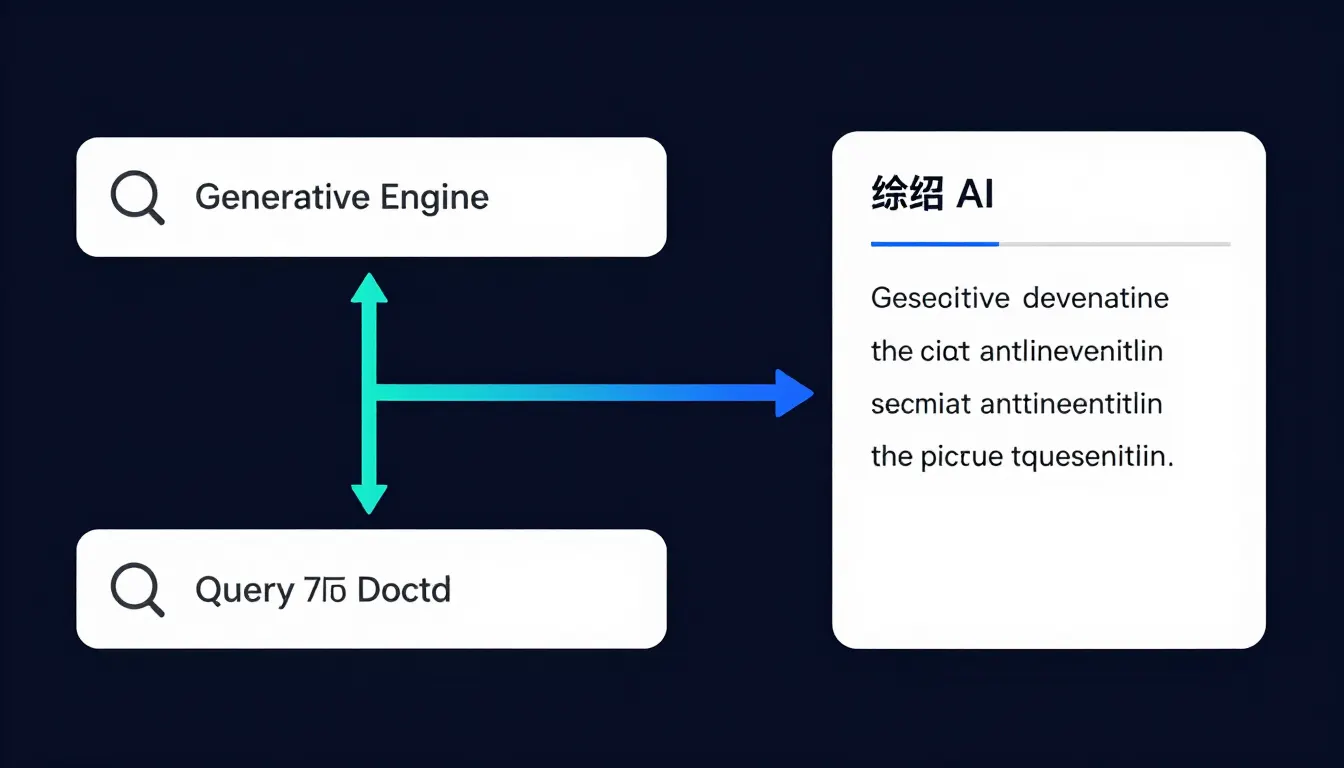
Generative Engine Optimization (GEO) is the practice of optimizing content for generative AI engines, systems that read multiple sources and synthesize a written answer rather than returning a list of links. Google AI Overviews, ChatGPT with search, Gemini, and Perplexity are all generative engines. GEO is about making your content easy for these engines to read, trust, and cite.
Quick Answer: What Is GEO?
GEO (Generative Engine Optimization) is optimizing content so generative AI engines can extract clear answers from it and cite it as a source. It emphasizes direct answers, structured content, citations, entity clarity, and authority. GEO is broader than AEO and complementary to traditional SEO.
Table of Contents
- What a generative engine is
- Where GEO sits among SEO, AEO, and GEO
- How generative engines build answers
- The GEO optimization signals
- Practical GEO implementation
- Common mistakes
- FAQs
What a Generative Engine Is
A generative engine takes a user question, retrieves relevant content from the web or its index, and uses a large language model to write a new answer that did not exist before. It then links to the sources it relied on. This is fundamentally different from a traditional search engine, which ranks existing pages and shows them as-is.
The key implication: your content is no longer the final output the user sees. It is input to a model that rewrites it. So your job is to make that input clear, factual, and easy to attribute.
Where GEO Sits Among SEO, AEO, and GEO
These terms overlap and are often confused. A simple framing:
- SEO: Optimize to rank links in search results.
- AEO: Optimize so answer engines can extract a direct answer.
- GEO: Optimize so generative engines can synthesize answers from your content and cite you.
GEO is the broadest of the three AI-focused disciplines because it covers synthesis, citation, and brand perception across generative systems. For the full comparison, read AI SEO vs AEO vs GEO.
How Generative Engines Build Answers
Most generative engines use a retrieval-augmented generation pipeline:
- Retrieve: Find candidate pages relevant to the query.
- Select: Score and pick the most useful, authoritative passages.
- Generate: Synthesize an answer from the selected passages.
- Cite: Link back to the sources used.
GEO targets every stage: being retrieved (technical access, relevance), being selected (clarity, authority), and being cited (attribution, entity consistency).

The GEO Optimization Signals
Research on generative engine optimization (notably the Princeton GEO paper) and observed practice point to several signals that improve the likelihood of citation:
- Direct, concise answers: A short factual answer near the top is easier to quote.
- Quotable sentences: Self-contained statements that make sense out of context.
- Citations and sources within content: Referencing primary data or linking to sources signals credibility.
- Structured format: Lists, tables, and clear headings are easier to parse.
- Authority and authorship: Named authors, expertise signals, and consistent entity data.
- Technical accessibility: Crawlable, fast, indexable pages.
These increase the likelihood of being referenced, not a guarantee.
Practical GEO Implementation
1. Rewrite key passages to be quotable
Take your most important answer and rewrite it as a single self-contained sentence. "GEO is the practice of optimizing content so generative AI engines can synthesize answers from it and cite the source." That sentence can be lifted verbatim.
2. Add citations inside your content
Where you state a fact, link to the source. Generative engines appear to favor content that itself cites primary sources, because it signals verifiability.
3. Structure for extraction
Use question headings, short paragraphs, and summary tables. Add schema markup for FAQ and Article types.
4. Strengthen entity signals
Make sure your brand is a well-defined entity. This connects to entity SEO and knowledge graph work.
Common Mistakes
- Confusing GEO with keyword stuffing for AI; clarity beats repetition.
- Writing long preambles before the answer.
- Ignoring traditional SEO, GEO depends on being retrieved first.
- Claiming GEO guarantees citations; it only improves the odds.
Conclusion
GEO is the discipline of making your content a reliable, quotable input for generative AI engines. It rewards clarity, structure, citations, and authority, the same things that make content good for humans. Start by rewriting your most important answers to be self-contained and quotable, then build outward.
For hands-on help, see our GEO services and AI SEO services, or book a free consultation. Related reading: what is AI SEO, SEO vs GEO, and AI SEO vs AEO vs GEO.
Ready to Implement This Strategy?
Stop reading and start executing. Explore our Data-Driven SEO Services or book a direct strategy call.
Book Your Strategy AuditFrequently Asked Questions
Transform Insights into Revenue
Partner with an AI-driven consultant to map out a measurable growth system specifically for your brand.

Jagmohan Kurmi
AI-Driven Full-Stack Digital Marketer
Jagmohan Kurmi helps Indian businesses grow with SEO, local SEO, Google Ads, Meta Ads, WordPress websites, AI visibility, lead generation, content strategy, AI tools training, and performance-focused digital marketing systems. As an AI SEO Expert in India, I specialize in Answer Engine Optimization and data-driven performance marketing using my M.Tech in Industrial Engineering and Management framework.