AI Search Readiness Checklist for 2026
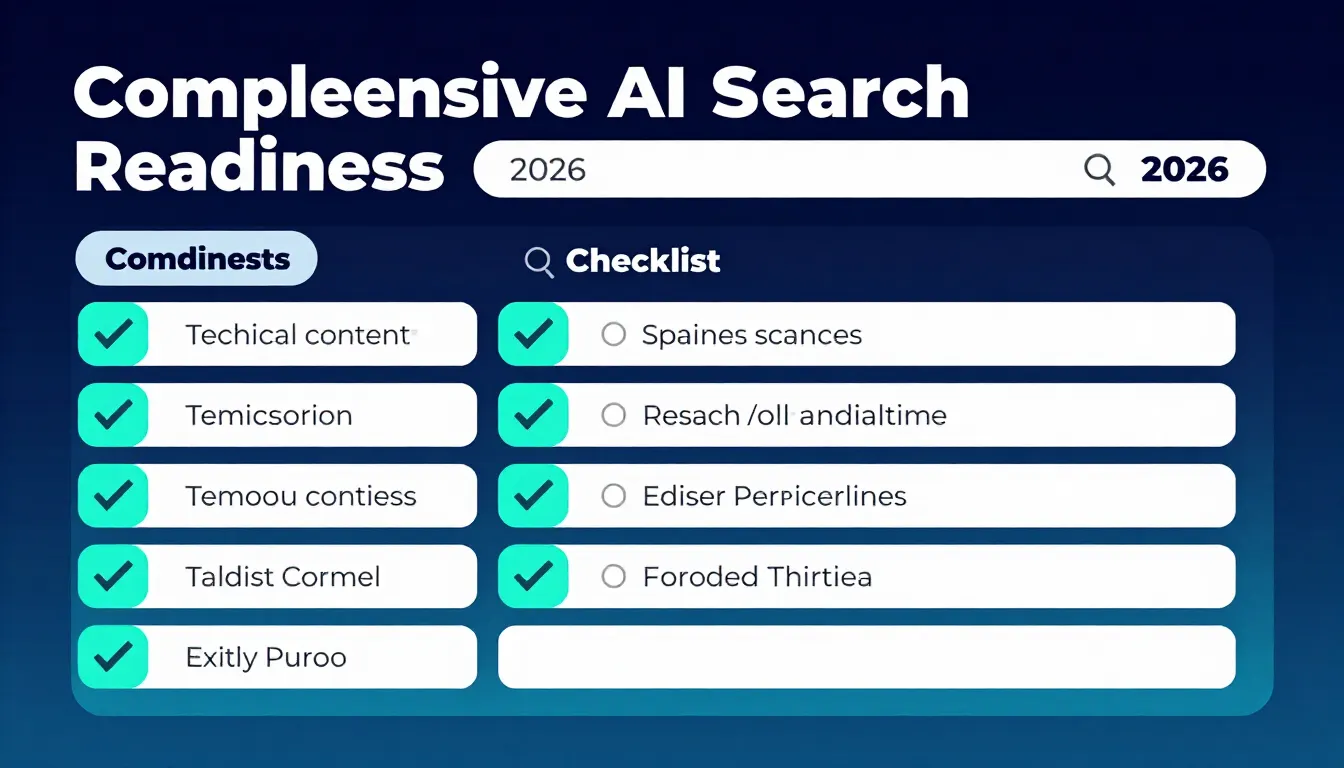
An AI search readiness checklist is a structured way to assess whether your site is ready to be discovered, understood, and cited by AI search engines in 2026. It covers technical foundations, content structure, entity clarity, schema, authority, and monitoring. Use it to find gaps and prioritize work. This checklist brings together the disciplines covered across our AI Visibility cluster into one assessment.
Quick Answer: What Is on an AI Search Readiness Checklist for 2026?
The checklist covers six areas: technical crawlability and speed, answer-first content structure, entity clarity and consistency, schema markup, genuine authority and E-E-A-T, and ongoing monitoring across AI engines. Work through each area, fix the gaps, and re-check periodically as AI engines evolve.
This is part of our AI Visibility cluster. For foundations, read what is AI SEO and how to build AI search visibility.
Table of Contents
- How to use this checklist
- 1. Technical foundations
- 2. Content structure
- 3. Entity clarity
- 4. Schema markup
- 5. Authority and E-E-A-T
- 6. Monitoring
- Common mistakes
- Best practices
- FAQs
How to Use This Checklist
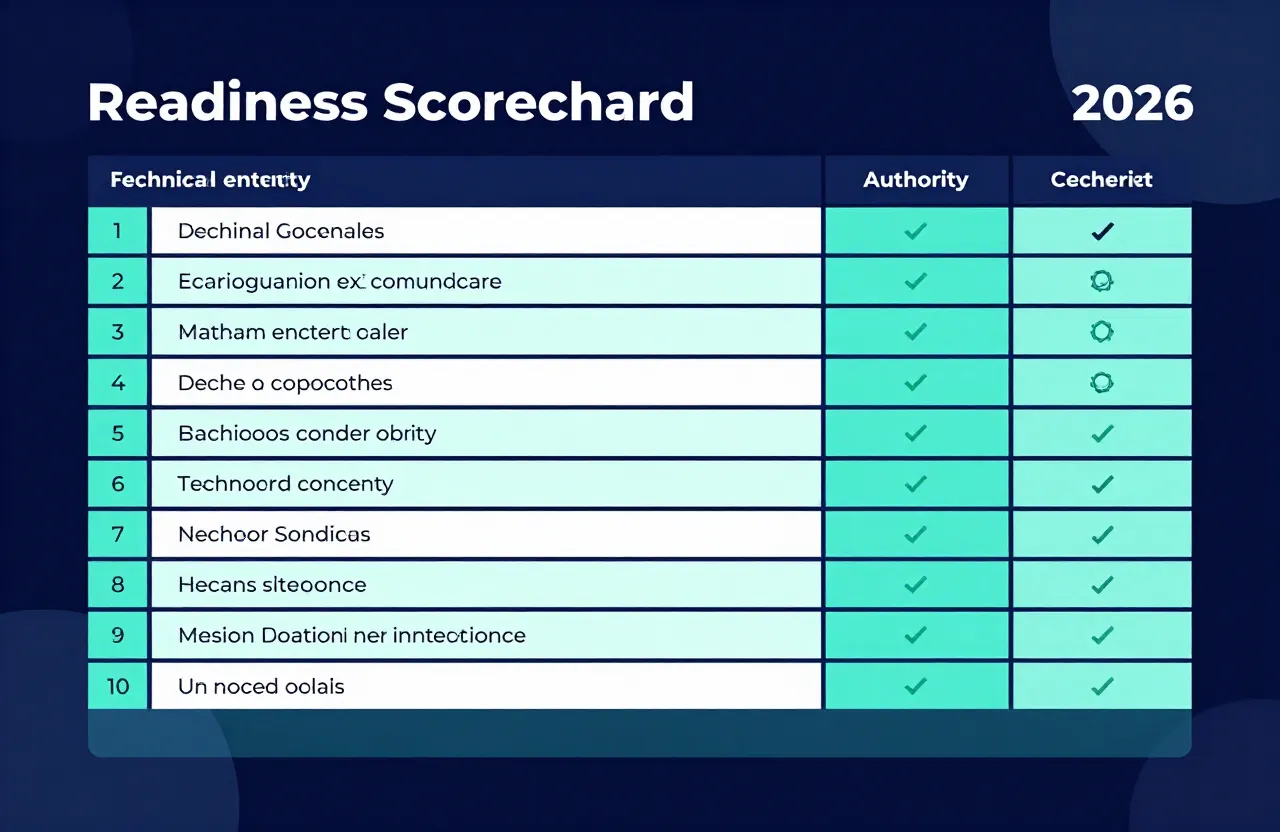
Score each item as done, partial, or missing. Fix the missing items first, then the partial ones. Re-run the checklist quarterly, because AI engines and guidance evolve. The checklist is a summary of the full guides in this cluster, so follow the links for depth on each area.
1. Technical Foundations
- Site is crawlable: clean robots.txt, no accidental noindex, logical navigation. See navigation for AI understanding.
- XML sitemap submitted to Google Search Console and monitored.
- Pages load fast and are mobile-friendly.
- Breadcrumbs present on every page with BreadcrumbList schema.
- No crawl errors blocking key pages.
2. Content Structure
- Every key page has a direct answer under its main heading. See answer engine optimization.
- Question-style H2s mirror how users ask.
- Lists and tables used for steps and comparisons.
- Content organized into topical clusters, not isolated pages. See topical authority.
- Each page has one primary service link and two to four cluster links.
3. Entity Clarity
- Organization and Person schema define your entity. See entity SEO explained.
- A brand factsheet documents canonical names, services, and details. See brand factsheets.
- NAP is consistent across your site, Google Business Profile, and directories.
- Service pages open with a one-sentence definition. See AI-readable service pages.
4. Schema Markup
- Article, Organization, Person, and BreadcrumbList schema applied where relevant. See schema markup for AI search.
- FAQPage schema on pages with visible FAQs.
- Service or Product schema on commercial pages.
- Schema values consistent with visible content and the brand factsheet.
5. Authority and E-E-A-T
- Genuine credentials and author identity surfaced on about and team pages. See how to show evidence.
- No invented statistics, clients, case studies, or results.
- Original examples and frameworks add unique value. See original examples.
- Legitimate links and mentions earned over time.
6. Monitoring
- Monthly brand mention audit across Google, ChatGPT, Gemini, and Perplexity. See brand mention audit.
- Periodic content refresh audit for stale facts. See content refresh audit.
- Wrong information traced and corrected at its sources. See correcting wrong information.
- Citations and brand mentions tracked alongside clicks. See zero-click searches.
Common Mistakes
- Treating AI search as a one-time project instead of an ongoing practice.
- Fixing content but ignoring technical crawlability or entity consistency.
- Adding schema without fixing the underlying written answers.
- Not monitoring how AI engines actually represent your brand.
- Inventing authority signals instead of earning them genuinely.
Best Practices
- Work through all six areas, not just content or just schema.
- Fix missing items first, then partial ones.
- Re-run the checklist quarterly as AI engines evolve.
- Keep a single source of truth for entity details.
- Earn authority genuinely and monitor your AI representation regularly.
Conclusion
AI search readiness in 2026 is the combination of technical foundations, answer-first content, entity clarity, schema, genuine authority, and ongoing monitoring. Use this checklist to find your gaps, fix them in priority order, and re-check quarterly. Readiness is not a one-time state; it is a practice that keeps your site visible as AI search evolves.
For a full AI search readiness assessment and plan, explore our AI SEO services, SEO audit services, and AI visibility services, or book a free SEO consultation. Related: AI search optimization for new websites and how to build AI search visibility.
Ready to Implement This Strategy?
Stop reading and start executing. Explore our Data-Driven SEO Services or book a direct strategy call.
Book Your Strategy AuditFrequently Asked Questions
Transform Insights into Revenue
Partner with an AI-driven consultant to map out a measurable growth system specifically for your brand.

Jagmohan Kurmi
AI-Driven Full-Stack Digital Marketer
Jagmohan Kurmi helps Indian businesses grow with SEO, local SEO, Google Ads, Meta Ads, WordPress websites, AI visibility, lead generation, content strategy, AI tools training, and performance-focused digital marketing systems. As an AI SEO Expert in India, I specialize in Answer Engine Optimization and data-driven performance marketing using my M.Tech in Industrial Engineering and Management framework.