Technical SEO for AI Search: What Businesses Need to Know

There is a version of the AI search conversation that goes: "SEO is dead, content and entities are everything now." It is wrong in a specific way. Every AI engine that answers questions from the web, Google AI Overviews, ChatGPT with search, Perplexity, Gemini, first has to fetch, read, and parse your pages. That is a technical process, and it fails for technical reasons. A page that renders its content only after JavaScript executes, that redirects in a chain, that serves a canonical pointing somewhere else, or that returns a 404 to a crawler is invisible to AI search no matter how well it is written. The content layer gets the attention; the technical layer decides who is even in the room.
This guide is the technical reference for that layer. If you want the step-by-step implementation sequence instead, read how to make your website ready for AI search; the two work together.
Quick Answer: What Technical SEO Matters for AI Search?
The technical SEO that matters for AI search is the same foundation that matters for Google, applied more strictly: pages must be crawlable and indexable, return clean status codes, carry correct canonicals, render their content in served HTML, work on mobile, load fast, expose structured data, and sit in a logical site architecture. AI retrieval systems depend on these basics, but no single technical fix guarantees AI visibility.
Table of Contents
- Why AI search raised the stakes on technical SEO
- Crawlability and indexability
- Status codes
- Canonicalization
- Rendering
- Mobile usability
- Page speed
- Structured data
- Robots controls
- Site architecture
- What technical SEO does not guarantee
- A sensible audit order
- Common mistakes
- FAQs
Why AI Search Raised the Stakes on Technical SEO
Two things changed. First, there are more readers than before: in addition to Googlebot, AI retrieval systems fetch pages on their own schedules, and a site that is merely "good enough" for one crawler may be unreliable for another. Second, the cost of a fetch failure went up. In traditional search, a slow or half-rendered page might rank slightly worse. In AI search, a page that cannot be parsed cleanly simply does not enter the candidate pool for synthesis. There is no partial credit.
What did not change is the fundamentals. Nobody outside the engine companies knows the exact retrieval or ranking formulas for any AI system, and anyone claiming a proprietary AI ranking system is selling certainty that does not exist. What you can rely on is that these systems need to fetch, read, and parse pages, and that the mechanics of doing that well are documented, boring, and fully within your control.
Crawlability and Indexability
Crawlability means a crawler can reach and fetch your pages. Indexability means the fetched page is allowed into the index. They are different failures with different fixes, and mixing them up wastes diagnostic time. A page can be perfectly crawlable but blocked from indexing by a noindex tag, and perfectly indexable in principle but unreachable because nothing links to it. The full breakdown of this layer, including robots.txt, sitemaps, and testing methods, is in how website crawlability affects AI search visibility.
Status Codes
Every request a crawler makes returns a status code, and engines read them literally:
| Code | Meaning | What to Do |
|---|---|---|
| 200 | Page served correctly | The only code an important page should return |
| 301 | Permanent redirect | Use for moved pages; keep chains to one hop |
| 302 | Temporary redirect | Rarely appropriate permanently; crawlers may not consolidate signals |
| 404 | Not found | Fine for genuinely dead pages; fix if a live page 404s |
| 410 | Gone intentionally | Signals permanent removal more strongly than 404 |
| 5xx | Server error | Urgent; crawlers and users both lose access intermittently |
Watch for soft 404s, pages that return 200 with a "content not found" message. Engines increasingly detect them, but they waste crawl budget and confuse retrieval. Check your important URLs directly and through Google Search Console, which reports crawl errors by page.
Canonicalization
Canonical tags tell engines which URL is the definitive version of a page when near-duplicates exist, parameters, sorting, pagination, print versions. For AI search, canonicalization matters twice over: it prevents diluted signals across duplicate URLs, and it prevents an engine from synthesizing an answer from a parameterized variant you never intended as the source. Rules that hold up in practice:
- Every indexable page has a self-referencing canonical by default.
- Canonicals are absolute URLs, consistent with your sitemap and internal links.
- Redirected URLs and canonicals never fight each other; if a page 301s, its destination carries the canonical.
- Do not canonicalize similar-but-different pages into one; that is a content decision, not a technical one.
Rendering
Rendering is where AI readiness is won or lost quietly. If your key content, the answers, the facts, the prices, exists only after JavaScript runs, you are betting that every crawler that matters will execute your JavaScript the way a browser does. Google does render, at a cost and with delay. Other retrieval systems may fetch the served HTML and move on. The safe position is that your primary content is present in the served HTML. Test it yourself: fetch your most important page with JavaScript disabled and check whether the answer a customer needs is visible. If it is not, that is a structural problem, and it is usually fixable with server-side rendering or static generation rather than a rebuild.
Mobile Usability
Most of your audience, and most of the testing AI engines do, happens on mobile. Mobile usability is table stakes: readable font sizes, no horizontal overflow, tappable targets, no interstitials blocking content. It also affects how confidently an engine can parse your pages, because a broken mobile layout usually means broken structure. Test on real devices, not just a resized desktop window.
Page Speed
Speed matters for retrieval reliability more than for ranking in AI search. A page that times out or takes many seconds to deliver its HTML risks being skipped or partially read. The practical targets are unglamorous: fast server response, efficient delivery of HTML and critical assets, images that are sized and lazy-loaded appropriately, and no render-blocking chains in front of the content. The detailed optimization playbook is in website speed optimization. Measure with real field data where you can, and treat lab scores as diagnostics rather than goals.
Structured Data
Structured data is the one technical layer that is genuinely new-ish in importance for AI search, because it hands the engine an explicit, unambiguous map of your content and entities instead of making it infer them. Organization and Person schema define who you are; Article schema defines content; FAQPage labels question-answer pairs; BreadcrumbList defines hierarchy. The rules are strict and worth following: schema must mirror visible content, identifiers must stay stable, and schema never substitutes for writing the answer clearly. The full implementation guide is schema markup for AI search.
Robots Controls
Robots.txt and meta robots tags are the access gates. The failure mode is almost always accidental: a site-wide disallow left over from a staging environment, a noindex on a template that leaked onto real pages, or a robots.txt rule that blocks a crawler token you did not realize an AI system uses. Audit both regularly:
- Robots.txt blocks only what should genuinely be excluded, and does not block CSS, JS, or image assets that affect rendering.
- No important page carries a noindex or nofollow by accident.
- Staging rules were removed when the site went live.
Site Architecture
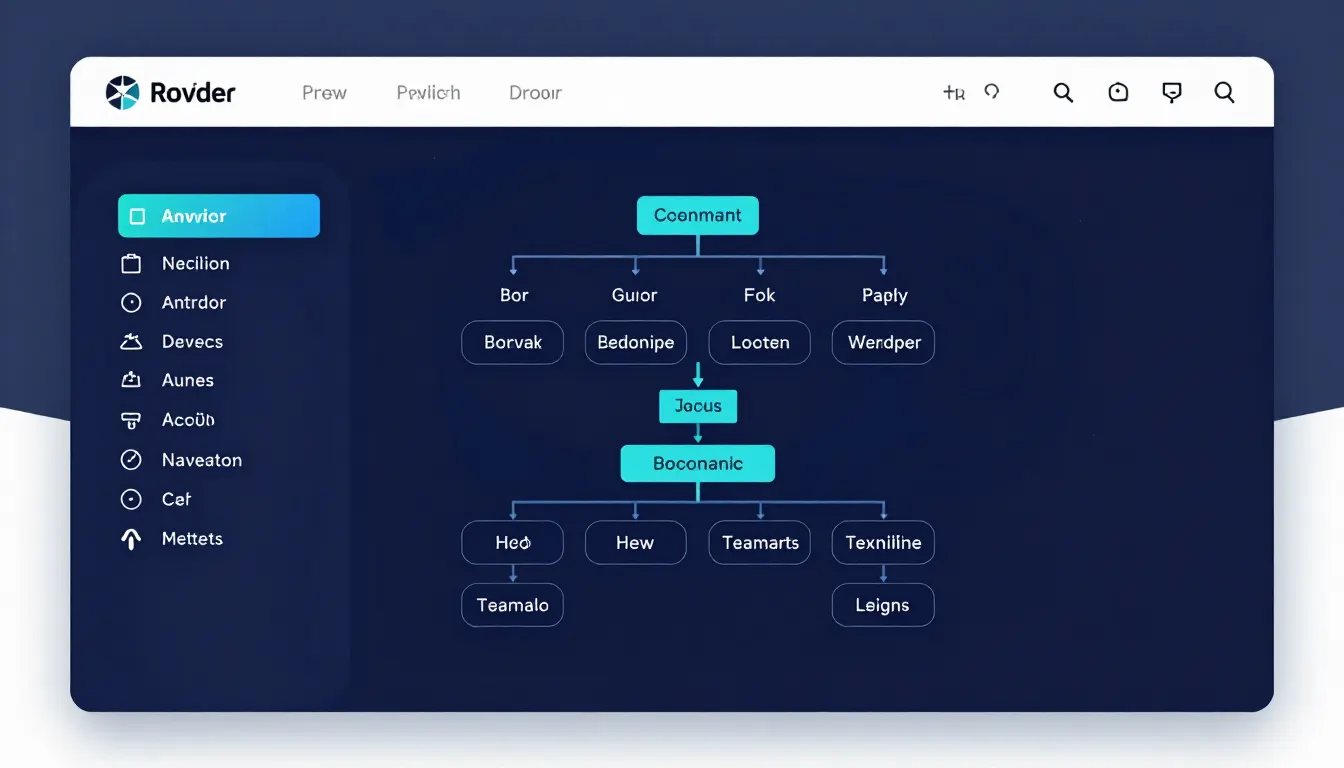
Architecture is how everything above is organized: URL structure, hierarchy, internal linking, and navigation. Flat, logical, predictable architecture helps crawlers spend their budget on pages that matter and helps engines understand topical relationships. Deep, tangled, or filter-heavy structures strand content. The two pieces to read next are how to optimize website navigation for AI understanding and how internal linking helps AI search understand website topics.
What Technical SEO Does Not Guarantee
Being honest about limits: a technically flawless site is eligible to be fetched, parsed, and considered. It is not guaranteed to be cited by ChatGPT, recommended by Gemini, or included in a Google AI Overview. Selection depends on relevance, authority, competition, and model behavior that no one outside the engine companies controls. Technical work removes every reason within your power that an engine would fail to read you. That is the whole and honest claim.
A Sensible Audit Order
- Access first: robots.txt, meta robots, status codes on important URLs.
- Content delivery: served HTML contains the answers; fix rendering if not.
- Duplicates: canonicals correct, sitemap consistent, no redirect chains.
- Performance: server response and page delivery fast enough to be reliable.
- Structure: architecture logical, internal linking builds topical clusters.
- Labels: schema present, matching visible content, validated.
- Test: ask your target questions in AI engines and fix what the tests expose.
For a structured version of this, see the AI search readiness checklist for 2026.
Common Mistakes
- Optimizing content and schema while the site half-renders or blocks crawlers.
- Leaving staging robots rules live in production.
- Redirect chains and canonicals that contradict each other.
- Blocking CSS and JS in robots.txt, breaking the crawler's ability to render the page.
- Assuming a fast lab score means reliable delivery of the actual answer content.
- Believing any technical fix guarantees AI citations.
Conclusion
Technical SEO for AI search is not a new discipline; it is the old discipline with less tolerance for error. Crawlable, indexable, correctly coded, cleanly rendered, fast, well-structured, honestly labeled. Do that work first, because everything in the content and entity layers sits on top of it. Then test in the real engines and fix what the tests show, on a schedule, forever.
If you want this audited and fixed for your site, our technical SEO services and AI SEO services cover the full technical layer, or start with an AI search audit. Related reading: how website crawlability affects AI search visibility and how to make your website ready for AI search.
Ready to Implement This Strategy?
Stop reading and start executing. Explore our Data-Driven SEO Services or book a direct strategy call.
Book Your Strategy AuditFrequently Asked Questions
Transform Insights into Revenue
Partner with an AI-driven consultant to map out a measurable growth system specifically for your brand.

Jagmohan Kurmi
AI-Driven Full-Stack Digital Marketer
Jagmohan Kurmi helps Indian businesses grow with SEO, local SEO, Google Ads, Meta Ads, WordPress websites, AI visibility, lead generation, content strategy, AI tools training, and performance-focused digital marketing systems. As an AI SEO Expert in India, I specialize in Answer Engine Optimization and data-driven performance marketing using my M.Tech in Industrial Engineering and Management framework.