AEO Audit Checklist for Businesses
An AEO audit is narrower than an AI SEO audit, and that narrowness is its value. It asks one specific question: when an answer engine, Google AI Overviews, ChatGPT, Gemini, or a voice assistant, reads your page, can it extract a clean, self-contained answer and cite you as the source? Most businesses assume their content is fine because it reads well for humans. This checklist tests whether it is actually extractable by a machine. It is the diagnostic behind our AEO audit service, written so you can run it yourself.
Quick Answer: What Is on an AEO Audit Checklist?
An AEO audit checks five things on each priority page: whether a direct answer appears in the first 40 to 60 words, whether it is a self-contained quotable sentence, whether headings match real questions, whether FAQ and Article schema is present and aligned with visible content, and whether the format, lists, tables, definitions, aids extraction. Mark each pass, partial, or fail, then fix the fails in order.
How AEO Audit Differs from a General AI SEO Audit
A general AI SEO audit covers the whole stack, technical, content, entity, schema, authority. An AEO audit zooms in on one layer: the answer itself. It assumes retrieval works and asks what happens next, whether the retrieved content contains an extractable answer. This makes it the right audit when your site is technically healthy but still not getting cited. For the broader audit, see the AI SEO audit checklist; run that first if you have technical issues.
1. Answer Position
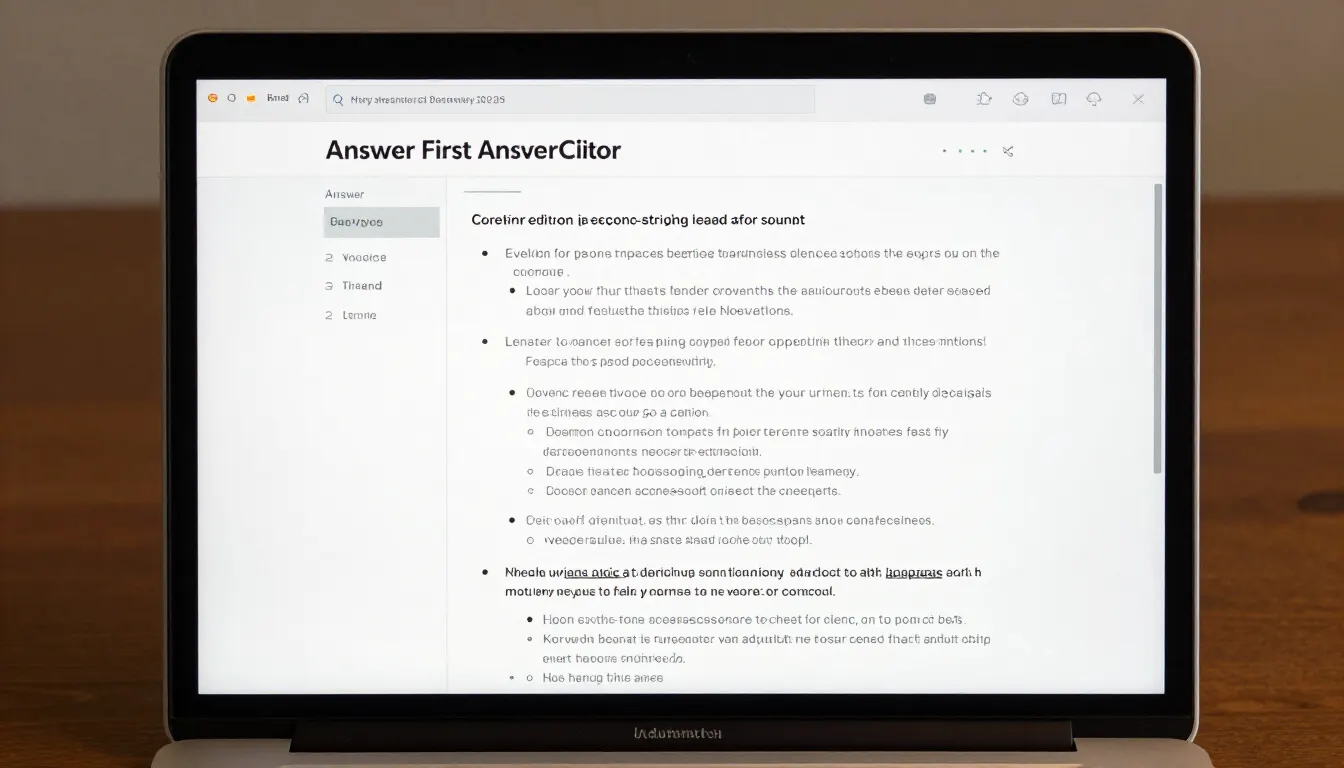
Answer engines lift the first clear answer they find. Check whether each priority page states a direct answer to its main question in the first 40 to 60 words after the heading. If the answer appears three scrolls down, embedded in a paragraph, or only after a long introduction, that is a fail. Rewrite the opening so the answer comes first, then expand with detail below. This is the core of answer engine optimization.
2. Answer Completeness
A clean answer is not just early, it is self-contained. Check whether your key facts are stated as single sentences that hold their meaning even when pulled out of context. Many pages explain a concept over several paragraphs but never state it as one standalone sentence an engine can lift verbatim. If your answer only makes sense when read in full, mark it partial and rewrite the key fact as a self-contained sentence.
3. Question Coverage and Heading Alignment
Answer engines match natural-language questions to content. Audit whether your headings are phrased the way customers actually ask, and whether you have a page or section for each important question:
- Headings read as real questions, not internal labels like "Overview."
- Every high-value buyer question has a dedicated answer page or section.
- FAQ questions match how customers phrase them, not marketing language.
An FAQ written as "Why choose us?" instead of "How much does SEO cost in India?" never matches a real query. See how to optimize FAQ content for AI search.
4. Schema Alignment
Schema labels your answers for machines, but only if it matches the visible content. Check:
- FAQPage schema present on pages with visible FAQs, and the schema questions match the visible ones.
- Article schema present on content pages with correct author and dates.
- HowTo schema on step-by-step pages, if applicable.
- No schema pointing to answers that are buried or missing.
A schema-content mismatch is a fail, because it tells the engine an answer exists where none is cleanly extractable. The reference is schema markup for AI search.
5. Format Extractability
Some facts are easier to lift as lists, tables, or definitions than as prose. Audit whether each priority page uses the format that makes its facts cleanest:
- Steps are in ordered lists, not buried in paragraphs.
- Comparisons are in tables, not scattered sentences.
- Definitions are stated as short, bolded definitions.
- No wall-of-text sections where the answer is hidden.
How to Prioritise AEO Fixes
Once you have your marks, fix in this order:
- Fix answer position fails first, move answers to the top of each page.
- Fix answer completeness, rewrite key facts as self-contained sentences.
- Align headings and FAQs with real customer questions.
- Fix schema to match the now-correct visible content.
- Reformat scattered facts into lists, tables, and definitions.
Then test: ask your target questions in Google AI Overviews, ChatGPT, and Perplexity and see whether your answers get extracted. The testing method is in how to check your AI search visibility.
What an AEO Audit Does Not Guarantee
Being honest about limits: an AEO audit improves extractability. It does not guarantee that a specific engine cites you on a specific query, because selection also depends on authority, competition, and opaque model behaviour. What it does is remove the structural reasons your content might be passed over, the part within your control. For the broader picture including entity and authority, pair this with the AI SEO audit checklist.
Common Mistakes
- Adding FAQ schema to pages with no visible FAQs, a mismatch that fails extraction.
- Writing FAQs in marketing language instead of how customers ask.
- Burying the answer under an introduction on every page.
- Assuming good prose is extractable, when scattered facts are not.
- Auditing only one page and assuming the rest are fine.
Conclusion
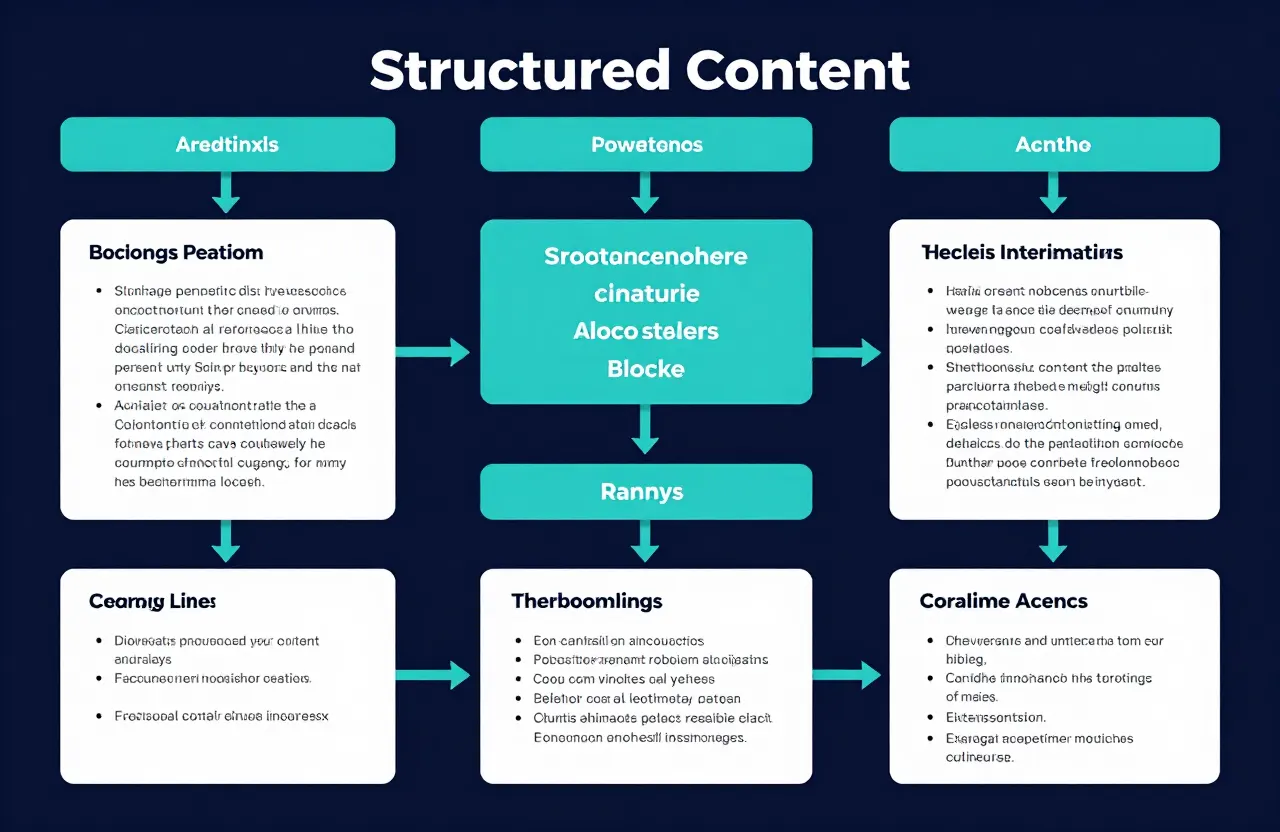
An AEO audit is a focused diagnostic through five checks: answer position, answer completeness, question coverage, schema alignment, and format extractability. Run it on each priority page, mark pass, partial, or fail, and fix the fails in order. Most content that reads well for humans still fails extraction because the answer is buried or never stated as a self-contained sentence, and fixing that is what moves you from readable to citable.
If you want a professional AEO audit with a prioritised fix list, our AEO audit services and AEO services cover this in depth. Or book a free consultation. Related reading: the AI SEO audit checklist and how to optimize FAQ content for AI search.
Ready to Implement This Strategy?
Stop reading and start executing. Explore our Data-Driven SEO Services or book a direct strategy call.
Book Your Strategy AuditFrequently Asked Questions
Transform Insights into Revenue
Partner with an AI-driven consultant to map out a measurable growth system specifically for your brand.

Jagmohan Kurmi
AI-Driven Full-Stack Digital Marketer
Jagmohan Kurmi helps Indian businesses grow with SEO, local SEO, Google Ads, Meta Ads, WordPress websites, AI visibility, lead generation, content strategy, AI tools training, and performance-focused digital marketing systems. As an AI SEO Expert in India, I specialize in Answer Engine Optimization and data-driven performance marketing using my M.Tech in Industrial Engineering and Management framework.