How to Build Strong Brand Entity Signals
Ask an AI engine about a well-known brand and it answers fluently. Ask about an unknown one and it hedges. The difference is not website quality; it is the density of entity signals, the accumulated evidence that your business is a distinct, stable, describable thing. Building those signals is slow, unglamorous work, and it is the part of AI visibility most businesses either skip or fake. This guide covers the signals that matter, how to build each one legitimately, and the ones you should not waste time on.
Quick Answer: How Do You Build Strong Brand Entity Signals?
Build brand entity signals by defining your business in structured data, keeping one canonical version of your facts across every listing and profile, connecting all profiles to your entity with sameAs, earning genuine reviews and accurate mentions on reputable sites, and publishing consistently on your subject so engines associate your entity with your topic. Every signal must be real; fabricated signals damage the exact trust you are building.
Table of Contents
- What a brand entity signal actually is
- The signal inventory, ranked by impact
- How to build each signal legitimately
- Signals you should not chase
- How to check whether your signals are working
- Common mistakes
- FAQs
What a Brand Entity Signal Actually Is
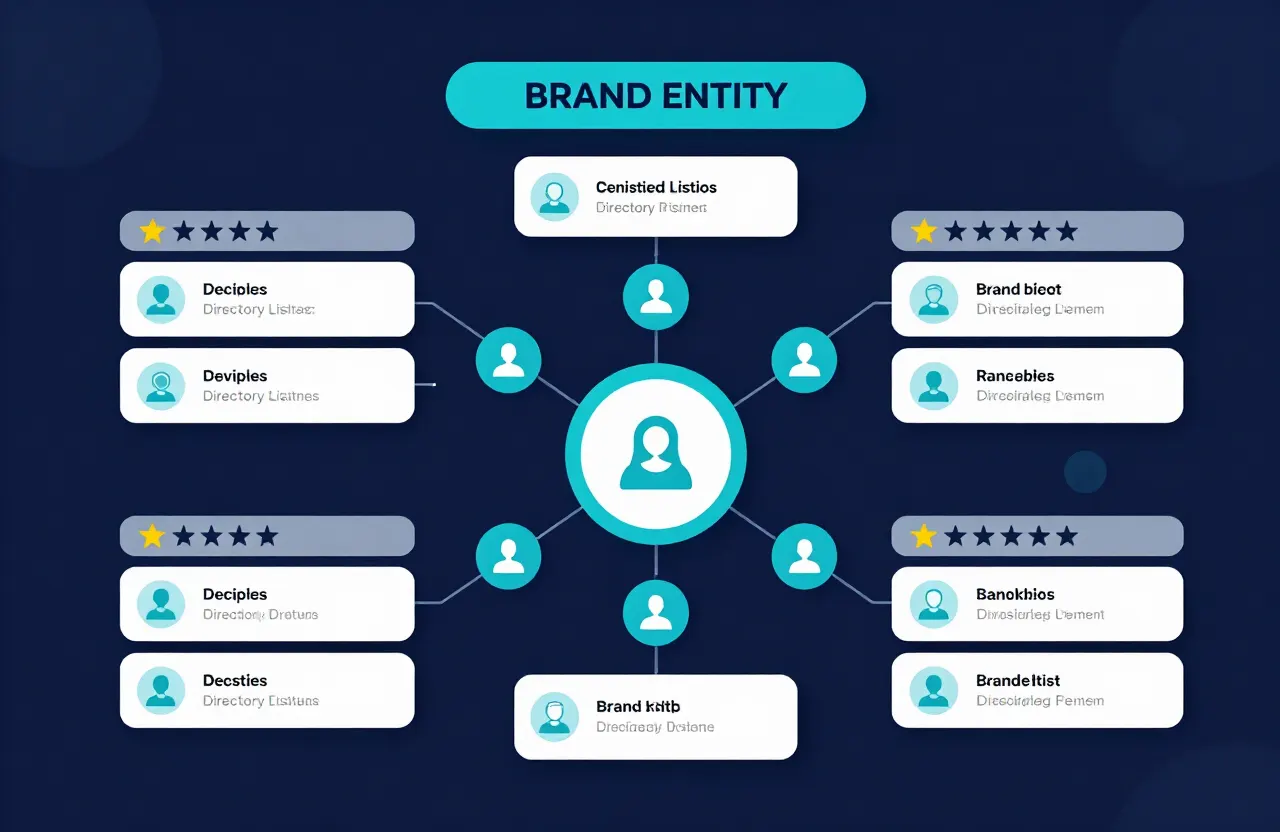
A brand entity signal is any piece of evidence that helps a search or AI system answer three questions about your business: does it exist, what is it, and is it what it claims to be. Your schema is a signal. So is a consistent directory listing, a genuine review, a mention in an industry article, and the fact that your own site describes your services the same way every time. Engines assemble these into a confidence picture about your entity. Strong signals agree with each other; weak ones conflict or come from low-quality sources.
The key idea: signals are corroborating evidence, not votes you can buy. Ten consistent, independent confirmations of the same facts beat a hundred scattered, contradictory ones. That is why the work is about alignment and legitimacy, not volume.
The Signal Inventory, Ranked by Impact
| Signal | What It Tells the Engine | You Control It? |
|---|---|---|
| Canonical facts on your own site | The official version of who you are | Fully |
| Organization / Person schema | A machine-readable definition of the entity | Fully |
| Google Business Profile | Verified existence, location, and category | Mostly |
| Consistent directory listings | Independent confirmation of your facts | Mostly |
| sameAs profile connections | That all profiles are one entity | Fully |
| Genuine reviews | Real customers interact with you | Partly |
| Mentions on reputable sites | Third parties reference you accurately | Partly |
| Topical depth on your site | What subject your entity belongs to | Fully |
How to Build Each Signal Legitimately
1. Publish one canonical version of your facts
Everything starts here. Write down your exact business name, one-sentence description, service list, service area, contact details, and key people in a single factsheet. Every other signal is built by copying from it. The template is in how to create a brand factsheet for AI search.
2. Define the entity in schema
Add Organization (and Person for founders) schema with a stable @id, your canonical facts, and a sameAs list of your official profile URLs. The schema must match your visible content exactly. Implementation guidance is in schema markup for AI search.
3. Complete and verify your Google Business Profile
A verified profile is one of the strongest existence signals available to a local business, and it is a source engines actually read. Fill every field, use your canonical name without keyword stuffing, and keep hours and categories current. The local dimension is covered in how local businesses can improve AI search visibility.
4. Align the listings that matter, skip the rest
You do not need hundreds of directories. You need the handful that are real in your industry and region, each stating your canonical facts. A few accurate, consistent listings beat dozens of contradictory ones. Do not mass-submit to spam directories; low-quality sources add noise, not signal.
5. Earn reviews honestly
Reviews tell engines that real customers interact with your business, and review content feeds how AI describes you. Ask satisfied customers for reviews honestly and respond to them professionally. Never fabricate or buy reviews; when detected, they damage the exact trust the signals exist to build. How reviews feed answers is covered in how customer reviews influence AI search answers.
6. Earn accurate mentions, not volume
A mention in one reputable industry publication, stating correct facts about your business, is worth more than dozens of low-quality references. Earn mentions through genuinely useful content, real expertise, and relationships in your industry. How to track what exists is covered in how to audit brand mentions across AI search platforms.
7. Build topical association deliberately
Engines associate entities with subjects. If you want your brand associated with your topic, publish deeply and consistently on that topic and interlink the coverage. One strong cluster beats scattered posts on everything. The method is in topical authority for AI search.
Signals You Should Not Chase
- Mass directory submissions: Volume of low-quality listings adds conflicting noise, not confirmation.
- Fabricated or bought reviews: Detectable, and they corrode the trust every other signal depends on.
- Keyword-stuffed business names: Adding marketing words to your listing name confuses the entity instead of strengthening it.
- Bought mentions on irrelevant sites: A mention on a site with no relevance to your industry confirms nothing about your entity.
- Chasing a knowledge panel directly: Panels are an outcome of strong signals, not a thing you can apply for. See knowledge graph and AI search.
How to Check Whether Your Signals Are Working
The test is simple and free: ask AI engines about your business and your subject, and watch what happens over time.
- Ask ChatGPT, Gemini, and Perplexity what they know about your business name, and note the accuracy.
- Ask topic questions in your niche and note whether you appear at all.
- Repeat monthly and track whether descriptions get more accurate and appearances more frequent.
The full method is in how to check your AI search visibility.
Common Mistakes
- Building schema before fixing conflicting facts, which formalizes the contradictions.
- Treating signals as a one-time project; listings drift and profiles age out of date.
- Prioritizing volume of listings over accuracy of the few that matter.
- Confusing social media activity with entity signals; activity is not the same as corroboration.
- Expecting signal work to substitute for content; signals make you describable, content makes you citable.
Conclusion
Strong brand entity signals are built from alignment and legitimacy: one canonical version of your facts, a machine-readable definition, a verified profile, a handful of accurate listings, honest reviews, real mentions, and deliberate topical depth. None of it is fast, and none of it is fakeable for long. But a business whose signals all agree is one an AI engine can describe with confidence, and that confidence is the foundation everything else in AI visibility stands on.
If you want help auditing and building your entity signals, our entity SEO services and AI SEO services cover this work end to end. Or book a free consultation. Related reading: entity SEO explained, how entity SEO helps AI search visibility, and maintaining entity consistency.
Ready to Implement This Strategy?
Stop reading and start executing. Explore our Data-Driven SEO Services or book a direct strategy call.
Book Your Strategy AuditFrequently Asked Questions
Transform Insights into Revenue
Partner with an AI-driven consultant to map out a measurable growth system specifically for your brand.

Jagmohan Kurmi
AI-Driven Full-Stack Digital Marketer
Jagmohan Kurmi helps Indian businesses grow with SEO, local SEO, Google Ads, Meta Ads, WordPress websites, AI visibility, lead generation, content strategy, AI tools training, and performance-focused digital marketing systems. As an AI SEO Expert in India, I specialize in Answer Engine Optimization and data-driven performance marketing using my M.Tech in Industrial Engineering and Management framework.