AI Search Visibility for E-commerce Websites
AI search visibility for e-commerce websites is the practice of making your products, categories, and buying guides easy for AI engines to discover, understand, and reference. Shoppers increasingly ask AI engines questions like "what is the best [product] for [use case]" or "how much does [product] cost." If your product and category pages are not structured for extraction, the AI engine will summarize a competitor instead. This guide covers the e-commerce-specific pages and signals that matter.
Quick Answer: How Do E-commerce Sites Build AI Search Visibility?
Structure product pages with clear titles, attributes, and review markup, publish answer-first category and buying-guide pages, use Product and Offer schema with accurate pricing and availability, answer common buyer questions with FAQ schema, and keep product data consistent across your site and feeds. Make every key page easy for an AI engine to extract and cite.
This is part of our AI Visibility cluster. For foundations, read what is AI SEO and how to build AI search visibility.
Table of Contents
- How shoppers use AI search for products
- The e-commerce pages that drive AI visibility
- Product pages: attributes and review markup
- Category and buying-guide pages
- Product schema and offers
- Answering buyer questions
- Implementation steps
- Common mistakes
- Best practices
- FAQs
How Shoppers Use AI Search for Products
Shoppers use AI search to compare options, check prices, read summaries of reviews, and get recommendations for specific use cases. AI engines synthesize product information from multiple retailers and review sites. Pages that clearly state what a product is, what it costs, and how it performs are easier to cite. Google's Product structured data guidance explains how to mark up products so they are machine-readable.
The E-commerce Pages That Drive AI Visibility
- Product pages: Clear titles, attributes, pricing, availability, and review markup.
- Category pages: Answer-first content that explains what the category is and how to choose.
- Buying guides: Content that answers "best [product] for [use case]" questions.
- Review and comparison pages: Balanced, specific product comparisons.
- FAQ sections: Common buyer questions answered directly on product and category pages.
Product Pages: Attributes and Review Markup
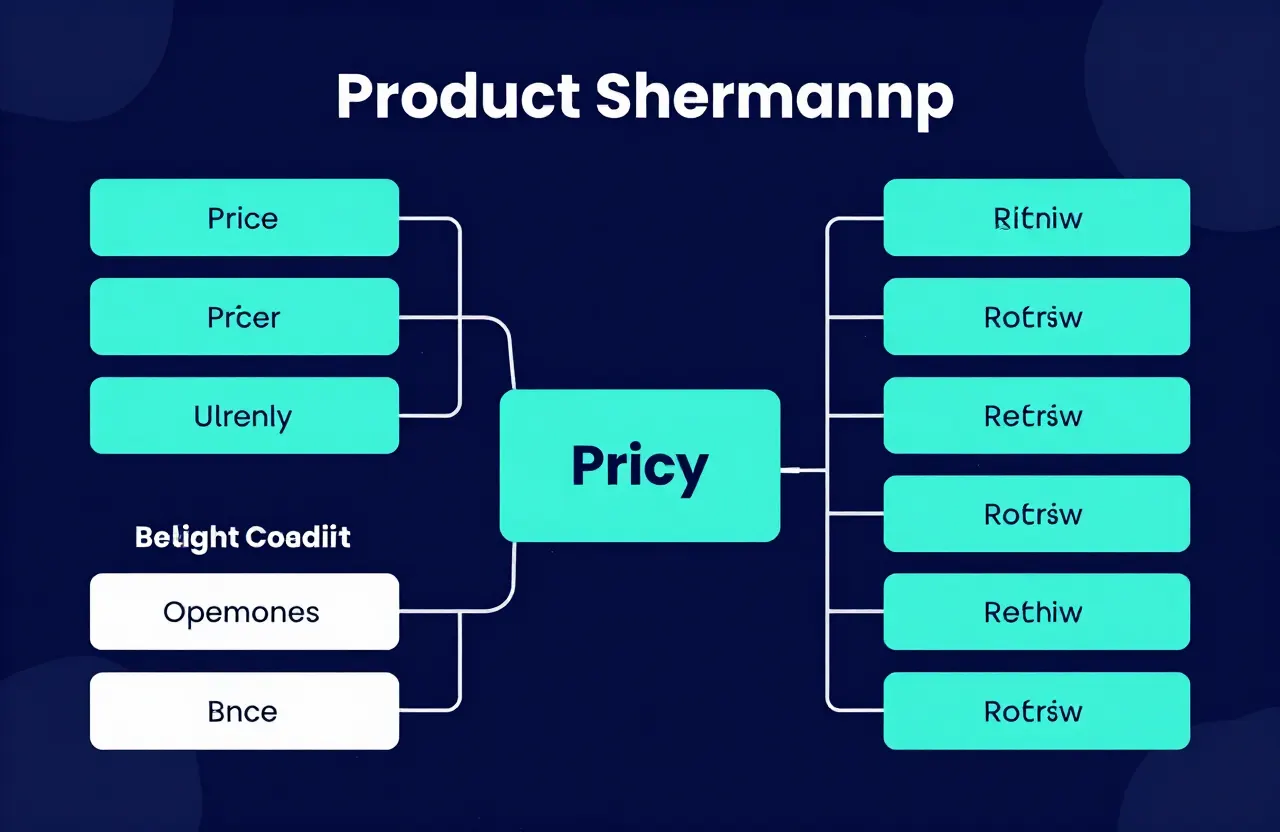
Each product page should clearly state the product name, key attributes, price, availability, and a concise description that answers "what is [product]." Add review markup so AI engines can summarize sentiment. Keep titles consistent with your product feed so the model does not encounter conflicting names. This entity discipline mirrors entity SEO explained.
Category and Buying-Guide Pages
Category pages should not be thin lists. Add an answer-first section that explains what the category is and how to choose within it. Buying guides should directly answer "best [product] for [use case]" with specific, balanced recommendations. These pages capture the questions shoppers ask AI engines and are more likely to be cited when they answer directly. This is the same answer-first approach as answer engine optimization.
Product Schema and Offers
Use Product schema with Offer properties for price, currency, and availability, following Schema.org Product. Accurate, current pricing and availability help AI engines represent your products correctly. Inconsistent or stale offer data is a common reason models show wrong prices, related to the issues in correcting wrong information in AI search.
Answering Buyer Questions
Add FAQ sections to product and category pages that answer the questions shoppers ask AI engines: "is [product] good for [use case]," "what is the difference between [product A] and [product B]," "does [product] include [feature]." Use FAQ schema for these. Distribute answers naturally and avoid duplicating thin Q&A across every page.
Implementation Steps
- Audit product pages: Check each for a clear title, attributes, price, availability, and review markup.
- Add answer-first category content: Write a concise explanation of each category and how to choose.
- Apply Product and Offer schema: Use accurate, current pricing and availability.
- Add FAQ sections: Answer common buyer questions with FAQ schema on key pages.
- Test in AI engines: Ask shopping questions in Google, ChatGPT, and Perplexity and refine based on citations.
Common Mistakes
- Leaving category pages as thin product lists with no explanatory content.
- Using inconsistent product names between pages and product feeds.
- Stale or incorrect pricing and availability in schema.
- Missing review markup, so AI engines cannot summarize sentiment.
- Duplicating thin FAQ content across every product page.
Best Practices
- Give every product page a clear title, attributes, price, and description.
- Add answer-first content to category and buying-guide pages.
- Use Product and Offer schema with current pricing and availability.
- Add review markup and genuine FAQ sections to key pages.
- Keep product names and data consistent across your site and feeds.
Conclusion
E-commerce AI search visibility comes from structured product pages, answer-first category content, accurate Product and Offer schema, and genuine FAQ sections. Make products easy for AI engines to extract and cite, and keep product data consistent everywhere.
For an e-commerce-specific AI visibility plan, explore our e-commerce marketing services and AI SEO services, or book a free SEO consultation. Related: schema markup for AI search and how to create an AI-readable service page.
Ready to Implement This Strategy?
Stop reading and start executing. Explore our Data-Driven SEO Services or book a direct strategy call.
Book Your Strategy AuditFrequently Asked Questions
Transform Insights into Revenue
Partner with an AI-driven consultant to map out a measurable growth system specifically for your brand.

Jagmohan Kurmi
AI-Driven Full-Stack Digital Marketer
Jagmohan Kurmi helps Indian businesses grow with SEO, local SEO, Google Ads, Meta Ads, WordPress websites, AI visibility, lead generation, content strategy, AI tools training, and performance-focused digital marketing systems. As an AI SEO Expert in India, I specialize in Answer Engine Optimization and data-driven performance marketing using my M.Tech in Industrial Engineering and Management framework.