AI Search Content Governance for Marketing Teams
AI search content governance is the set of roles, standards, and review processes that keep a marketing team producing consistent, accurate, AI-readable content at scale. As teams publish more content for AI visibility, the risk of inconsistency, vague answers, and wrong information grows. Governance is what prevents that drift and keeps every page contributing to a clear, trustworthy entity. This guide covers what to put in place.
Quick Answer: How Do You Govern Content for AI Search?
Define clear roles for writing, reviewing, and publishing, set standards for answer-first structure, entity consistency, and schema, create a review checklist that checks accuracy and internal links, and run every page through it before publishing. Keep a single source of truth for entity details so every team member uses the same values.
This is part of our AI Visibility cluster. For foundations, read what is AI SEO and how to build AI search visibility.
Table of Contents
- Why governance matters for AI search
- Roles and responsibilities
- Content standards
- A single source of truth for entities
- The review checklist
- Implementation steps
- Common mistakes
- Best practices
- FAQs
Why Governance Matters for AI Search
AI visibility depends on consistency and accuracy across many pages. When multiple writers publish without shared standards, entity details drift, answers get buried, schema is applied inconsistently, and wrong information slips in. Governance keeps the team aligned so every page strengthens the entity rather than diluting it. Google's helpful content guidance reinforces consistent, people-first quality, which governance operationalizes.
Roles and Responsibilities
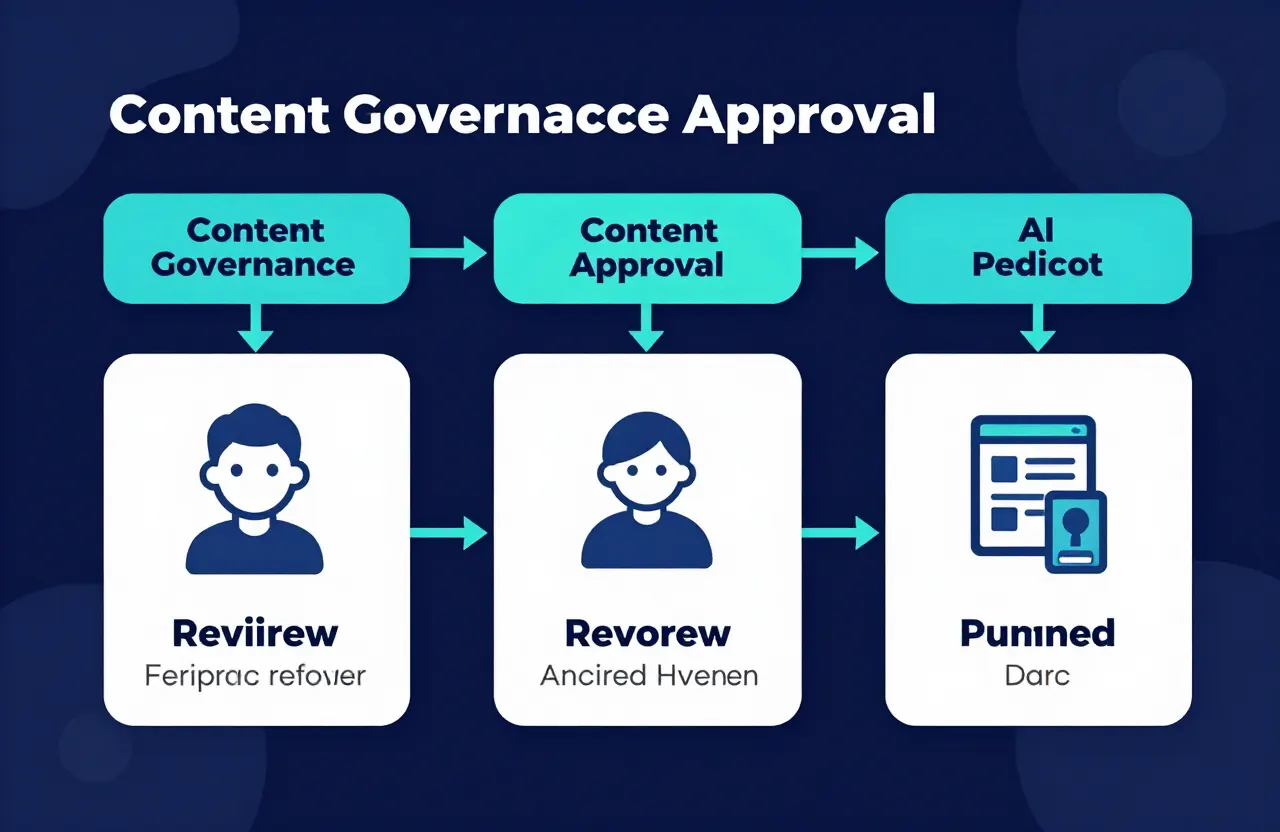
- Writer: Drafts answer-first content from a brief, following structure and entity standards.
- Reviewer: Checks accuracy, answer clarity, entity consistency, and internal links against the checklist.
- Publisher: Applies schema, confirms technical setup, and publishes.
- Owner: Maintains the source of truth for entity details and the content standards.
Content Standards
Set shared standards every page must meet: a one-sentence definition or direct answer near the top, question-style H2s with answer-first paragraphs, consistent entity names and details, matching schema, one primary service link plus two to four cluster links, and honest claims with no invented statistics. These standards come from the brief process in how to build a search-ready content brief and the structure in answer engine optimization.
A Single Source of Truth for Entities
Maintain one document, a brand factsheet, that holds the canonical name, services, contact details, and schema values for your entity. Every team member references it so the same values appear on every page, profile, and directory. This is the discipline in how to create a brand factsheet for AI search and prevents the inconsistency that causes wrong information, covered in correcting wrong information in AI search.
The Review Checklist
- Answer clarity: Is there a direct answer under the main heading?
- Entity consistency: Do names and details match the source of truth?
- Accuracy: Are all claims factual or clearly labeled as recommendations or observations?
- Schema: Is the correct schema applied with consistent values?
- Internal links: Is there one service link and two to four cluster links with descriptive anchor text?
- No invented claims: Are there no invented statistics, clients, or results?
Implementation Steps
- Assign roles: Name the writer, reviewer, publisher, and owner for each content area.
- Create the source of truth: Build a brand factsheet with canonical entity details and schema values.
- Set content standards: Document the answer-first, entity, schema, and linking rules.
- Build the review checklist: Turn the standards into a checklist the reviewer runs on every page.
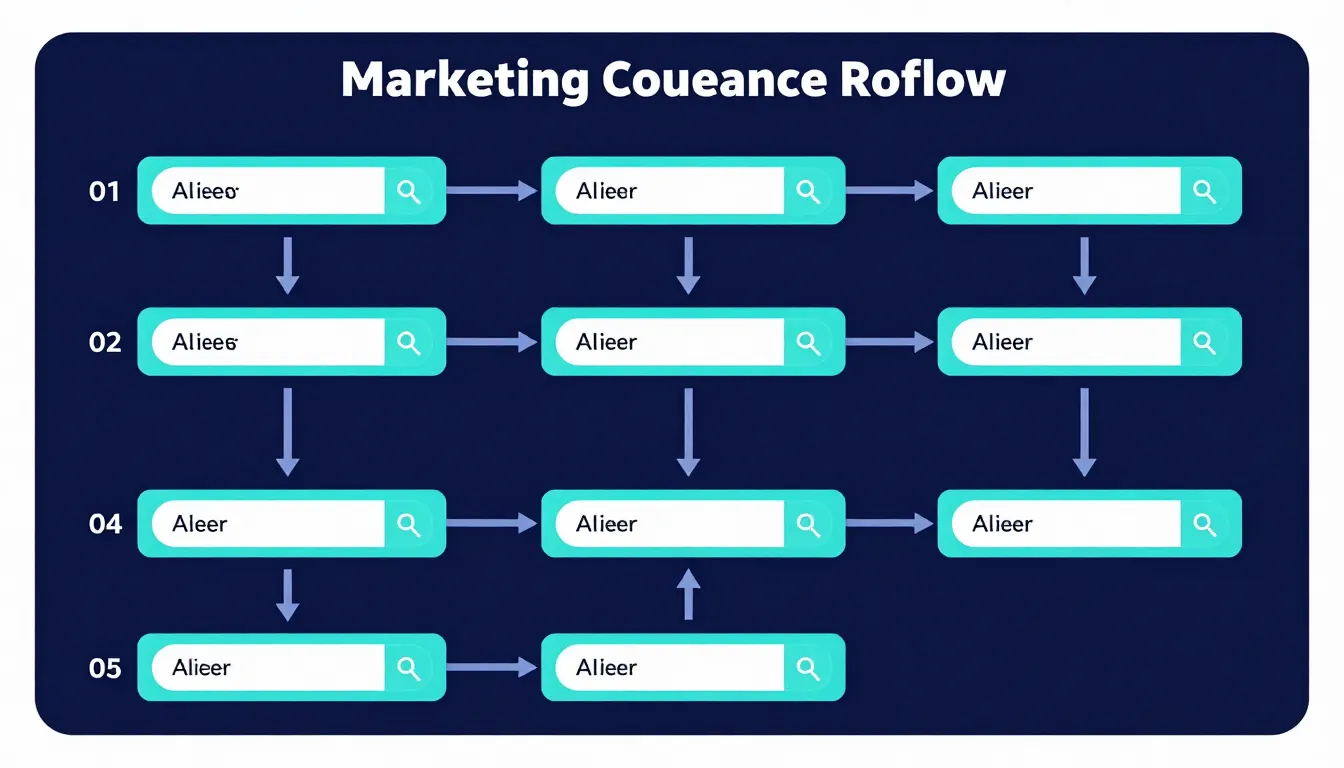
- Run the process: Brief, write, review against the checklist, publish, and audit periodically.
Common Mistakes
- Letting writers publish without a review step.
- No shared source of truth, so entity details drift across pages.
- Standards that exist in theory but are not enforced with a checklist.
- Reviewing for grammar but not for answer clarity, schema, or internal links.
- No periodic audit, so quality erodes over time.
Best Practices
- Assign clear writer, reviewer, publisher, and owner roles.
- Maintain one brand factsheet as the source of truth for entity details.
- Set and document answer-first, entity, schema, and linking standards.
- Run a review checklist on every page before publishing.
- Audit content periodically to catch drift and refresh stale facts.
Conclusion
AI search content governance keeps a marketing team producing consistent, accurate, AI-readable content at scale. Assign clear roles, maintain a single source of truth for entities, set shared standards, run a review checklist on every page, and audit periodically. Governance is what turns one good page into a trustworthy, visible cluster.
For help setting up content governance for AI search, explore our content strategy services and AI SEO services, or book a free SEO consultation. Related: how to build a search-ready content brief and AI search content refresh audit.
Ready to Implement This Strategy?
Stop reading and start executing. Explore our Data-Driven SEO Services or book a direct strategy call.
Book Your Strategy AuditFrequently Asked Questions
Transform Insights into Revenue
Partner with an AI-driven consultant to map out a measurable growth system specifically for your brand.

Jagmohan Kurmi
AI-Driven Full-Stack Digital Marketer
Jagmohan Kurmi helps Indian businesses grow with SEO, local SEO, Google Ads, Meta Ads, WordPress websites, AI visibility, lead generation, content strategy, AI tools training, and performance-focused digital marketing systems. As an AI SEO Expert in India, I specialize in Answer Engine Optimization and data-driven performance marketing using my M.Tech in Industrial Engineering and Management framework.