How to Build a Search-Ready Content Brief
A search-ready content brief is a structured document that defines what a piece of content must accomplish for search before any writing begins. It captures the target question, the intent behind it, the entities involved, the supporting questions to answer, the required structure, and the internal and external links to include. A good brief prevents drift, ensures answer-first writing, and gives AI search engines the clarity they need to extract and cite your content.
Quick Answer: How Do You Build a Search-Ready Content Brief?
Start with the primary question and its intent, list the entities the content must define, gather the supporting questions real users ask, define the answer-first structure with question-style headings, map internal links to relevant cluster pages and one service page, and list authoritative external references. Write the brief so a writer can produce an AI-readable, topically relevant page without guessing.
This is part of our AI Visibility cluster. For related process guides, read how to build AI search visibility and topical authority for AI search.
Table of Contents
- Why a content brief matters for AI search
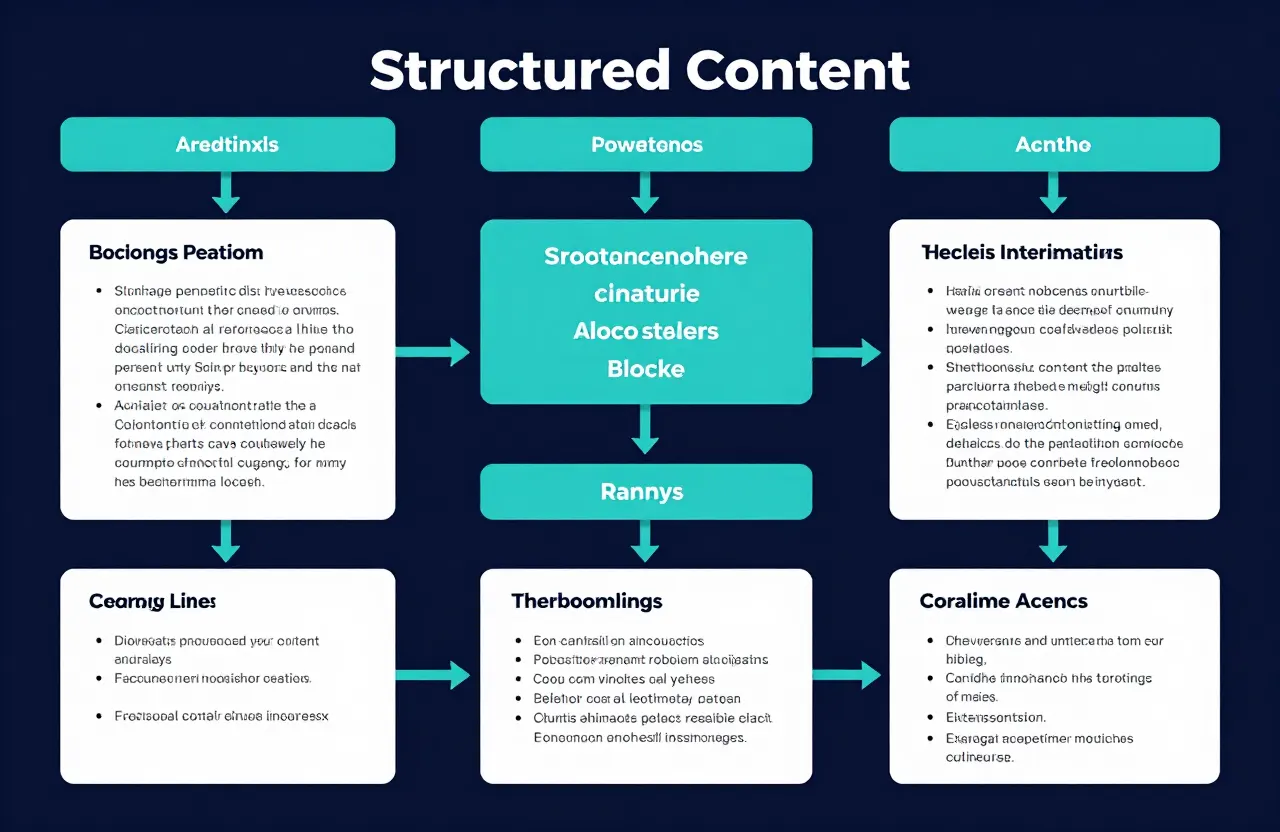
- The essential sections of a search-ready brief
- Step-by-step: building the brief
- Entity and question mapping
- Structuring for answer extraction
- Internal and external link planning
- Common mistakes
- Best practices
- FAQs
Why a Content Brief Matters for AI Search
Without a brief, writers tend to produce content that drifts from the core question, buries the answer, or misses the entities and supporting questions that make a page topically complete. AI engines reward pages that directly resolve a question and sit inside a consistent cluster. A brief forces that alignment before drafting, which is cheaper than rewriting later. Google's helpful content guidance reinforces writing with a clear purpose and audience in mind.
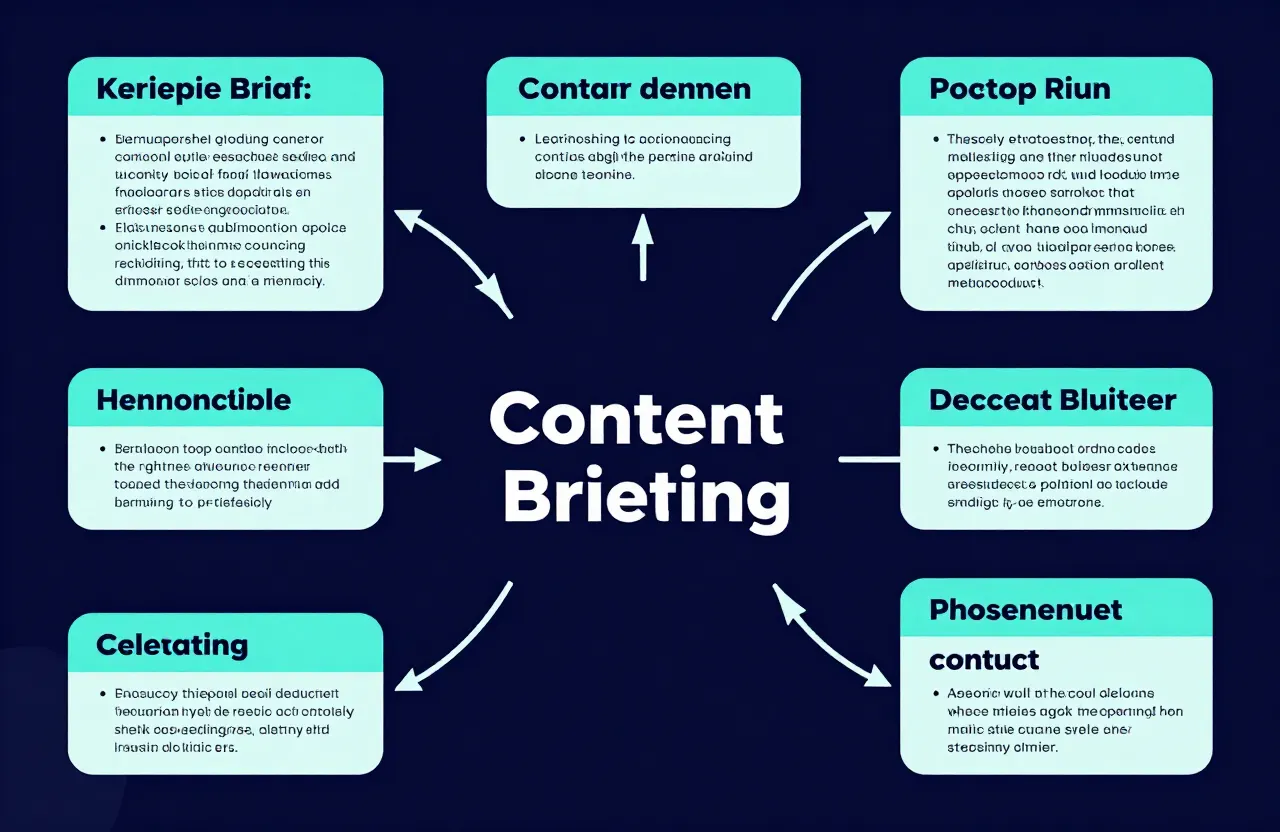
The Essential Sections of a Search-Ready Brief
- Primary question and intent: The one question the page must answer, plus the intent category.
- Target audience and funnel stage: Who is reading and where they are in their journey.
- Entities to define: The people, organizations, concepts, and places the content must clarify.
- Supporting questions: The related questions real users ask, each becoming an H2.
- Answer-first structure: The heading order and where the direct answer goes.
- Internal links: One service page plus two to four cluster siblings, with anchor text.
- External references: Official sources to cite for trustworthiness.
- Schema plan: Article, FAQ, and any entity schema to include.
Step-by-Step: Building the Brief
- Define the primary question: Write it the way a person would actually ask it in Google or ChatGPT.
- Classify the intent: Informational, how-to, comparison, or definitional. This shapes the structure.
- List the entities: Note every entity the content must define unambiguously, and check consistency with your existing entity signals. See entity SEO explained.
- Gather supporting questions: Pull real questions from search suggestions, the People Also Ask box, and AI engine outputs. Each becomes an H2 with an answer-first response.
- Set the structure: H1 for the title, a quick answer section, then H2s for each supporting question, then a conclusion and CTA.
- Map internal links: Choose one relevant service page and two to four cluster siblings. Write natural anchor text for each.
- List external references: Prefer official Google, Schema.org, OpenAI, or primary research sources.
- Specify schema: Note which schema types apply and the exact values to use.
Entity and Question Mapping
For each entity, record its canonical name, a one-sentence definition, and the schema type that represents it. For each supporting question, record the question text and a one-line summary of the answer. This mapping keeps the writer focused and ensures the page contributes to your topical cluster rather than standing alone. Pair this with the principles in how to create a brand factsheet for AI search for entity consistency.
Structuring for Answer Extraction
Specify in the brief that every H2 must be followed by a 40 to 60 word direct answer before any expansion. Require lists for steps and tables for comparisons. This makes the page easy for a model to parse and extract, which is the core of answer engine optimization.
Internal and External Link Planning
List the exact URLs and anchor text in the brief so links are deliberate, not added as an afterthought. One primary service link keeps the commercial connection clear; two to four cluster links build topical depth and prevent orphan pages. External links to authoritative sources support E-E-A-T, covered in how to show evidence in AI search content.
Common Mistakes
- Writing a brief that lists keywords but not intent or entities.
- Skipping the supporting questions, leaving the page topically thin.
- Planning links after drafting instead of in the brief.
- Not specifying answer-first structure, so the answer gets buried.
- Forgetting schema, which weakens machine readability.
Best Practices
- Write the primary question exactly as users ask it.
- Map every entity to a canonical name and schema type.
- Require a direct answer under every question heading.
- Plan one service link and two to four cluster links with anchor text.
- Cite official external sources to support trustworthiness.
Conclusion
A search-ready content brief aligns intent, entities, questions, structure, and links before writing begins. It is the cheapest way to produce content that is both traditionally rankable and AI-readable. Build the brief, then write to it.
For help building briefs and a content system optimized for AI search, explore our AI SEO services or book a free SEO consultation. Related: schema markup for AI search and AI search content refresh audit.
Ready to Implement This Strategy?
Stop reading and start executing. Explore our Data-Driven SEO Services or book a direct strategy call.
Book Your Strategy AuditFrequently Asked Questions
Transform Insights into Revenue
Partner with an AI-driven consultant to map out a measurable growth system specifically for your brand.

Jagmohan Kurmi
AI-Driven Full-Stack Digital Marketer
Jagmohan Kurmi helps Indian businesses grow with SEO, local SEO, Google Ads, Meta Ads, WordPress websites, AI visibility, lead generation, content strategy, AI tools training, and performance-focused digital marketing systems. As an AI SEO Expert in India, I specialize in Answer Engine Optimization and data-driven performance marketing using my M.Tech in Industrial Engineering and Management framework.