How to Adapt Your Search Strategy as AI Search Evolves

AI search is not a one-time change you optimize for and finish. The engines, the guidance, and the outputs keep evolving. Businesses that adapt responsibly stay visible over the long term; businesses that chase every trend or freeze in place do not. This guide explains how to adapt your search strategy as AI search evolves, what to keep stable, what to change, and how to avoid hype and unsupported claims.
Quick Answer: How Do You Adapt a Search Strategy as AI Search Evolves?
Adapt your strategy by keeping the stable fundamentals, crawlability, helpful content, consistency, and genuine authority, while continuously sharpening clarity, structure, and entity meaning. Monitor official guidance from Google Search Central and platform docs, test how you appear in the engines your customers use, and refine quarterly. Avoid hype, guaranteed-outcome claims, and tactic-chasing. Responsible adaptation means evolving with evidence, not reacting to rumors.
Table of Contents
- What stays stable as AI search evolves
- What actually changes
- How to monitor official guidance
- A quarterly adaptation routine
- How to evaluate new tactics responsibly
- Signs of hype to avoid
- Building a strategy that survives change
- FAQs
What Stays Stable as AI Search Evolves
Despite the noise, much of search is stable. Google's helpful content guidance and AI Overviews documentation consistently point to the same foundations. These do not change with each new model:
- Crawlability and indexing: if engines cannot read your site, nothing else matters.
- Helpful, people-first content: content that genuinely answers real questions.
- Consistency: identical business information across the web.
- Genuine authority: real reviews, real mentions, real author identity, real evidence.
- Clarity and structure: answer-first writing, headings, lists, and structured data.
These are your anchor. When something new appears, ask whether it strengthens or undermines these foundations before acting.
What Actually Changes
What changes is the emphasis and the surface where customers encounter you:
- The output format: more synthesized answers and fewer pure link lists.
- The importance of extractability: clear, quotable passages matter more than keyword density.
- Entity understanding: how confidently AI systems place you in their knowledge graph.
- The mix of engines: which assistants your customers use shifts over time.
- Measurement: rankings alone no longer capture visibility; citations and mentions matter too.
For how this differs from the past, read SEO vs GEO and ChatGPT SEO vs traditional SEO.
How to Monitor Official Guidance
Adapt responsibly by grounding decisions in primary sources, not social media rumors. Useful sources:
- Google Search Central for AI Overviews, helpful content, and structured data docs.
- Schema.org for structured data vocabulary and updates.
- Official platform blogs from OpenAI, Microsoft, and Google for feature changes.
- Your own testing in the engines your customers actually use.
When a claim circulates, check whether an official source confirms it before changing your site. Distinguish confirmed guidance from recommendations and emerging practices.
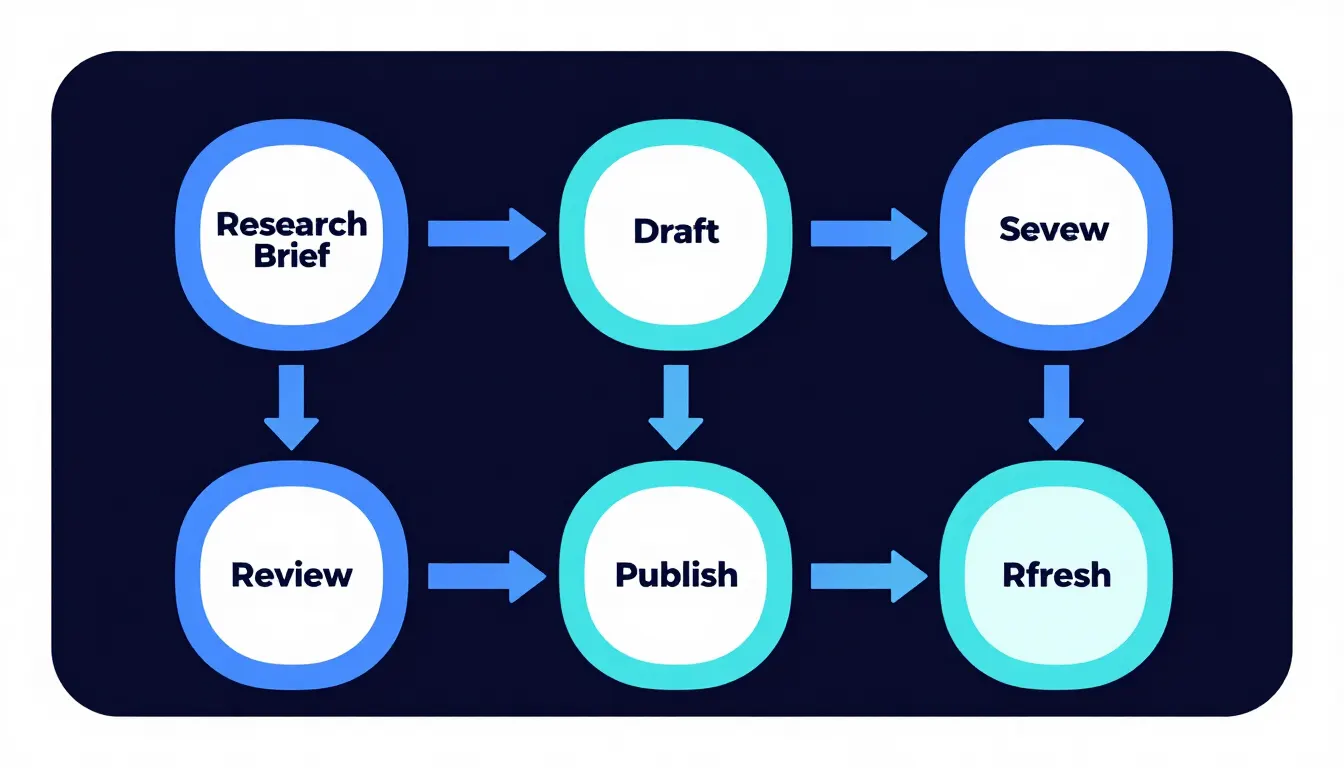
A Quarterly Adaptation Routine
Strategy that survives change runs on a rhythm, not on panic. A simple quarterly routine:
- Review official guidance: check for new or updated docs from Google and Schema.org.
- Test your visibility: ask your target questions in Google, ChatGPT, and Perplexity; note how and whether you appear.
- Audit consistency: re-check business information across listings and correct drift.
- Refresh content: update your most important pages with current, answer-first information.
- Check schema validity: re-run the Rich Results Test on key pages.
- Plan one improvement: pick one focused upgrade for the next quarter rather than ten scattered ones.
This mirrors the discipline in the AI search readiness checklist for 2026 and the team process in AI search content governance for marketing teams.
How to Evaluate New Tactics Responsibly
When a new tactic appears, run it through five questions before adopting it:
- Does an official source support it, or is it anecdotal?
- Does it strengthen clarity, consistency, or genuine authority?
- Could it mislead customers or violate a platform policy?
- Is it durable, or does it depend on a loophole that will close?
- Can I measure whether it actually changed anything?
If a tactic fails these questions, especially the policy and durability ones, skip it. Short-term tricks often become long-term penalties.
Signs of Hype to Avoid
- Guaranteed AI Overview placement or guaranteed citations.
- "Secret" AI ranking factors no official source confirms.
- Tools that promise to "submit" your site to AI engines as if it were a directory.
- Claims that traditional SEO is dead.
- Inflated statistics or fabricated case studies presented as proof.
Responsible adaptation means saying no to these even when competitors seem to benefit. For spotting unsupported claims, see how to show evidence in AI search content.
Building a Strategy That Survives Change
The most resilient strategy is the least clever one: be genuinely useful, be clear, be consistent, and be honest. Engines and models change, but the businesses that explain themselves well and earn real trust keep getting understood and referenced. Build your strategy around durable principles, treat tactics as experiments, and let official guidance and your own testing decide what stays.
Conclusion
Adapting to AI search is not about reacting to every announcement. It is about keeping stable fundamentals, sharpening clarity and entity meaning, monitoring official guidance, testing in the engines your customers use, and refining quarterly. Avoid hype and guaranteed-outcome claims, evaluate new tactics against durable principles, and build a strategy that survives change because it is grounded in genuine usefulness.
If you want a structured adaptation plan for your business, explore our AI SEO services or book a free SEO consultation. For related reading, see the AI search readiness checklist for 2026 and how to build AI search visibility.
Ready to Implement This Strategy?
Stop reading and start executing. Explore our Data-Driven SEO Services or book a direct strategy call.
Book Your Strategy AuditFrequently Asked Questions
Transform Insights into Revenue
Partner with an AI-driven consultant to map out a measurable growth system specifically for your brand.

Jagmohan Kurmi
AI-Driven Full-Stack Digital Marketer
Jagmohan Kurmi helps Indian businesses grow with SEO, local SEO, Google Ads, Meta Ads, WordPress websites, AI visibility, lead generation, content strategy, AI tools training, and performance-focused digital marketing systems. As an AI SEO Expert in India, I specialize in Answer Engine Optimization and data-driven performance marketing using my M.Tech in Industrial Engineering and Management framework.