Common AI SEO Mistakes Businesses Make (and How to Fix Them)
AI SEO is new enough that most businesses are learning by trial and error, and certain mistakes repeat across industries. Some come from applying old SEO habits to a different output format; others come from hype and panic. This guide lists the most common AI SEO mistakes and gives a practical fix for each, so you can avoid wasted effort and focus on what actually helps AI systems understand your business.
Quick Answer: What Are the Most Common AI SEO Mistakes?
The most common AI SEO mistakes are abandoning traditional SEO fundamentals, keyword stuffing instead of writing clear answers, leaving business information inconsistent across the web, adding schema without fixing content clarity, fabricating reviews or testimonials, expecting instant citations, and chasing every new AI tool instead of fixing core pages. Each has a straightforward fix rooted in clarity, consistency, and genuine authority.
Table of Contents
- Mistake 1: Abandoning traditional SEO
- Mistake 2: Keyword stuffing instead of clear answers
- Mistake 3: Inconsistent business information
- Mistake 4: Schema without clear content
- Mistake 5: Fabricated reviews and testimonials
- Mistake 6: Expecting instant citations
- Mistake 7: Chasing every new AI tool
- Mistake 8: Ignoring entity clarity
- How to prioritize your fixes
- FAQs
Mistake 1: Abandoning Traditional SEO
Some businesses hear "AI search is the future" and stop investing in crawlability, speed, indexing, and helpful content. This backfires because AI engines still retrieve from the web, and a slow, blocked, or thin site will not be read at all. Google's Search Central guidance explicitly recommends continuing to focus on helpful, people-first content.
Fix: Treat AI SEO as an extension of SEO. Keep your technical foundations solid, then add answer-first structure, schema, and entity clarity on top. Start with our step-by-step SEO audit if you are unsure where you stand.
Mistake 2: Keyword Stuffing Instead of Clear Answers
Old SEO trained people to repeat a keyword many times. AI engines do not reward density; they reward comprehension. A page stuffed with "best SEO expert in India best SEO expert India" is harder for a model to extract a clean answer from than a page that plainly states what you do and answers the question.
Fix: Write a direct 40 to 60 word answer to the main question right after the heading, then expand naturally. Use the keyword once or twice in context, not repeatedly. Clarity beats density.
Mistake 3: Inconsistent Business Information
If your business name, address, phone, or services differ between your site, Google Business Profile, and directories, the AI gets a low-confidence picture of your entity. This is one of the most common and most damaging mistakes for local and service businesses.
Fix: Create one canonical business record and align every listing to it. Audit and correct wrong information at the source using how to correct wrong business information in AI search.
Mistake 4: Schema Without Clear Content
Adding FAQ, Organization, or LocalBusiness schema feels like progress, but schema only helps machines parse what is already there. If the underlying content is vague or rambling, schema does not rescue it. This is a frequent "checkbox" mistake.
Fix: First make the content answer-first and clear, then add schema that accurately describes it. Validate with the Rich Results Test. See schema markup for AI search for the right order.
Mistake 5: Fabricated Reviews and Testimonials
Inventing reviews, testimonials, case studies, or statistics to look authoritative is a serious mistake. It violates platform policies, misleads customers, and collapses trust if exposed. AI systems also cross-reference sources, so fabricated claims can conflict with reality and reduce confidence in your entity.
Fix: Earn reviews honestly and present only real evidence. For how to show genuine evidence, read how to show evidence in AI search content.
Mistake 6: Expecting Instant Citations
Many businesses optimize a page and check the next day, then conclude AI SEO does not work. AI visibility compounds over months as engines re-ingest sources and update models. Instant results are not realistic for most topics.
Fix: Set a three to six month horizon. Track whether and how your business appears in answers over time using brand mention audits, and refine quarterly.
Mistake 7: Chasing Every New AI Tool
A new AI tool launches every week. Some businesses spend more time testing tools than fixing their core pages. Tool-hopping creates scattered, shallow work instead of durable clarity.
Fix: Pick one or two engines your customers actually use, focus on making your core pages clear and consistent, and treat new tools as occasional checks rather than a strategy.
Mistake 8: Ignoring Entity Clarity
AI systems think in entities, people, organizations, places, concepts. If your site never clearly states who you are, what you do, and where, the model cannot place you confidently. Many businesses skip this and jump to tactics.
Fix: Define your entity explicitly. Build a brand factsheet and add Organization or Person schema. See entity SEO explained and how to create a brand factsheet for AI search.
How to Prioritize Your Fixes
Not every mistake is equally urgent. Use this order:
- Fix consistency first: wrong or contradictory business information actively harms you.
- Remove fabricated content: replace fake reviews or claims with real evidence or nothing.
- Restore technical fundamentals: make sure the site is crawlable, fast, and indexable.
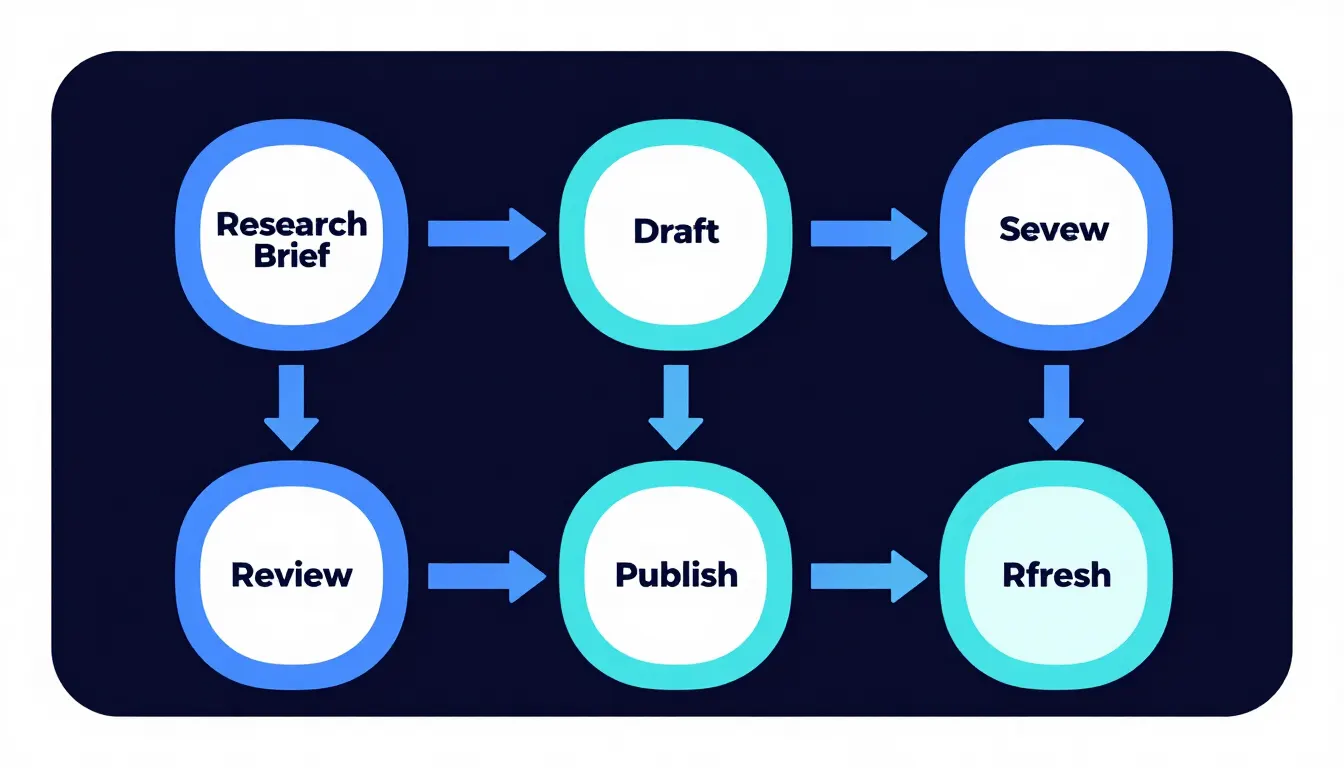
- Rewrite core pages answer-first: clarity before tactics.
- Add schema and entity clarity: once content is clear.
- Build a content cluster: depth over time, not overnight.
Conclusion
Most AI SEO mistakes come from panic, old habits, or treating tactics as a substitute for clarity. Fix consistency and honesty first, keep your technical foundations solid, write clear answers, and add schema and entity clarity on top. Avoid the hype cycle and focus on becoming genuinely easy for AI systems and people to understand.
If you want a structured review of what to fix first, explore our SEO audit services or book a free SEO consultation. For related reading, see the AI search readiness checklist for 2026 and how to build AI search visibility.
Ready to Implement This Strategy?
Stop reading and start executing. Explore our Data-Driven SEO Services or book a direct strategy call.
Book Your Strategy AuditFrequently Asked Questions
Transform Insights into Revenue
Partner with an AI-driven consultant to map out a measurable growth system specifically for your brand.

Jagmohan Kurmi
AI-Driven Full-Stack Digital Marketer
Jagmohan Kurmi helps Indian businesses grow with SEO, local SEO, Google Ads, Meta Ads, WordPress websites, AI visibility, lead generation, content strategy, AI tools training, and performance-focused digital marketing systems. As an AI SEO Expert in India, I specialize in Answer Engine Optimization and data-driven performance marketing using my M.Tech in Industrial Engineering and Management framework.